SEO writing examples · Oct 20, 2026
8 SEO Writing Examples with Before-and-After Rewrites
What does good SEO writing look like when adding keywords isn't enough? Good SEO writing answers the searcher's question directly, uses relevant terms naturally, organizes information with descriptive headings, and gives the page accurate metadata and appropriate structured data. It helps someone fi
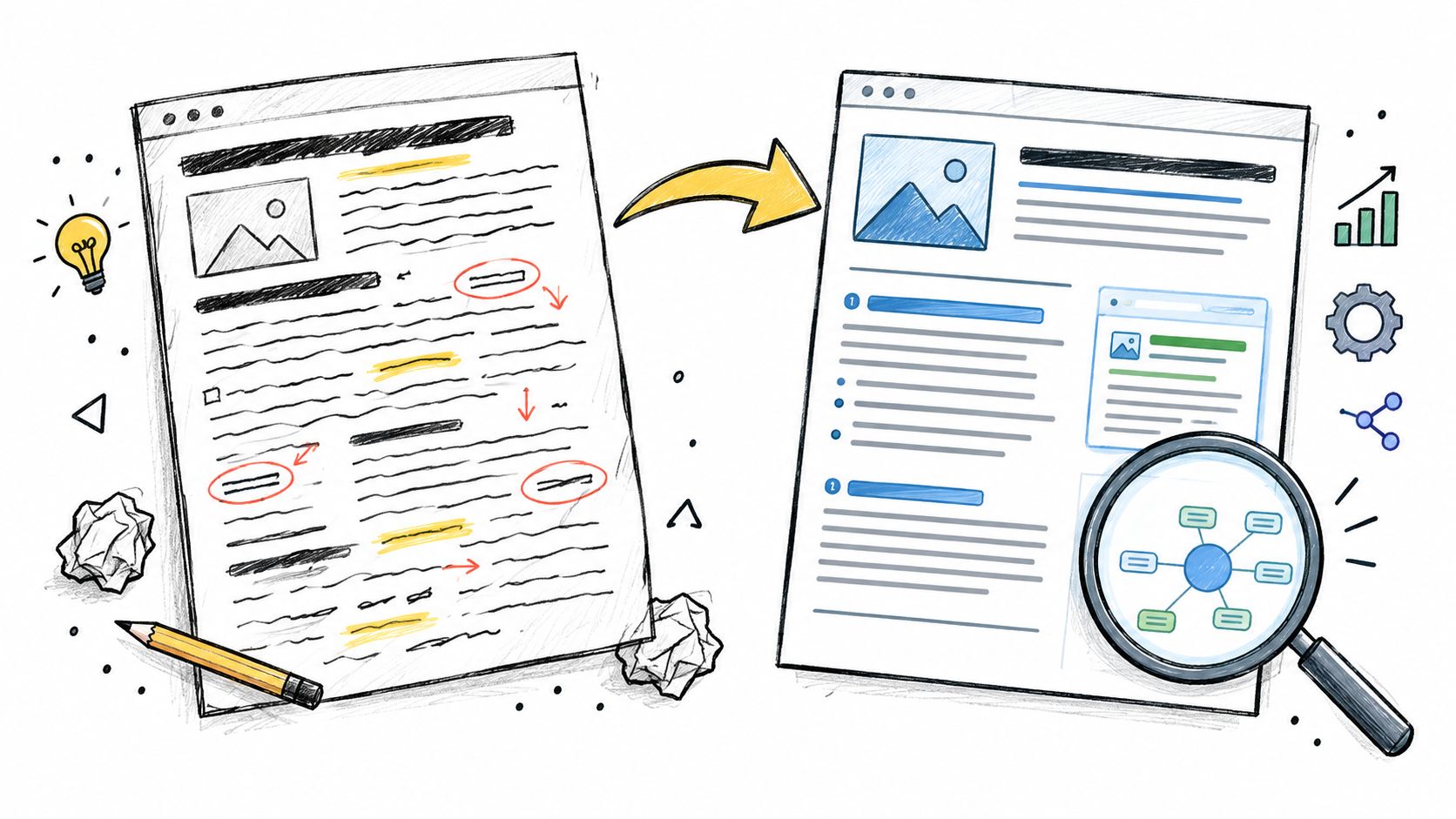
What does good SEO writing look like when adding keywords isn't enough? Good SEO writing answers the searcher's question directly, uses relevant terms naturally, organizes information with descriptive headings, and gives the page accurate metadata and appropriate structured data. It helps someone finish a task, understand a term, or make a decision without searching through filler.
The everyday publishing problem is usually less obvious than missing keywords. A newsletter guide explains why email matters but never explains setup. A software roundup names products without showing who should choose them. A migration article celebrates a new platform while leaving readers unsure what happens to existing URLs.
Google's people-first content guidance emphasizes an intended audience, relevant firsthand expertise, and enough useful information for readers to achieve their goals. That provides a better editing standard than phrase repetition.
The eight before-and-after rewrites below are original teaching examples, not quotations from named publishers or evidence of ranking gains. Their purpose is to isolate different editorial problems across familiar article formats.
A useful SEO article writing guide can support the broader workflow. The practical test remains simple: does each passage help the intended reader do something the weaker version didn't?
Table of Contents
Examples 1–2 Help Readers Act and Choose
1. How Can a Step-by-Step Guide Make a Task Easier?
Target query and intent: “How to start a newsletter.” The reader needs a working sequence, not an argument for starting.
Before copy
Starting a newsletter is a great way to connect with customers. Choose the best newsletter platform, create engaging content, and grow an audience. Consistency is important for newsletter success.
After copy
To start a customer newsletter, define its promise, prepare the signup experience, and test delivery before promoting it.
Define the promise. State who the newsletter serves and what subscribers will receive, such as local shop updates and product-care advice.
Prepare the signup form. Explain what subscribers are joining and connect the form to the intended audience list.
Draft the welcome email. Confirm the subscription and explain what happens next.
Test the reader's journey. Submit the form, check the confirmation, and open the email on a phone.
Publish the signup page. Promote it only after the full journey works.
Editorial decision: Replace broad encouragement with actions that have observable completion points.
Strategic analysis: The weak version contains relevant vocabulary but leaves the work undefined. The rewrite establishes dependencies: promotion follows testing, rather than appearing beside it as an unrelated tip.
A tutorial should also distinguish a written procedure from a tested procedure. Authors should record the tool version they used, describe confusing screens, and update instructions when the process changes.

Practical application: Give each step a verb and a completion check. VeloCMS's guide to writing posts that rank in Google and AI search provides related publishing context.
For a service business, the next action might be a phone inquiry rather than a newsletter subscription. Planning call tracking for SEO attribution can help define what the content team intends to measure, without confusing tutorial completion with a sale.
2. What Makes a Best-of Roundup Useful for Choosing?
Target query and intent: “Best email tools for a small newsletter.” The reader wants a manageable shortlist with meaningful differences.

Before copy
These are the best newsletter tools. Each offers powerful features and an easy-to-use interface. Any option can help a business grow.
After copy
The right shortlist depends on the work the publisher needs to complete. Evaluate Kit and Mailchimp against the same publishing task before recommending either.
For a text-focused newsletter: Check drafting, previewing, scheduling, and correction workflows.
For a shop sending product updates: Check how customer information reaches the mailing list and how relevant messages are selected.
For a team sharing publishing duties: Check permissions, review steps, and responsibility for sending.
For every candidate: Verify current pricing, applicable limits, export options, and support arrangements against official documentation.
These are selection criteria, not claims that either named product passes every test.
A shortlist becomes useful when readers can see why an option belongs on it.
Strategic analysis: A numbered ranking can imply more certainty than the testing supports. Grouping tools by use case is often more defensible than declaring an overall winner.
The improved passage also avoids treating “easy to use” as a self-explanatory finding. A useful review describes what the tester attempted, where friction occurred, and which reader would care.
Practical application: Build a selection grid in working notes, then publish the criteria as concise, scannable entries. Give each shortlisted product a supporting paragraph describing the observed benefit, limitation, and suitable audience.
If affiliate relationships exist, disclose them near the recommendations. If pricing appears, link to the vendor's official page and record when it was checked. Omitting an unverified price is better than publishing a confident but stale comparison.
Examples 3–4 Make Comparisons and Broad Topics Clear
3. How Can a Comparison Avoid a Manufactured Winner?
Target query and intent: “WordPress vs. Squarespace for a small blog.” The searcher has narrowed the field and needs a conditional recommendation.
Before copy
WordPress is the best platform for serious bloggers. Squarespace is fine for beginners, but growing businesses should choose WordPress.
After copy
Choose between WordPress and Squarespace by testing the publishing requirements that matter to the site.
Conditional verdict: If a specific integration, editing workflow, or export requirement is essential, eliminate any option that can't demonstrate it. If both meet the requirements, compare ongoing administration, support responsibilities, and total documented costs.
A fair test uses the same draft article, images, metadata, and correction task on each candidate. The recommendation should identify which requirement determined the outcome, rather than treating the reviewer's preference as universal.
Comparison rule: Recommend a platform for a stated situation, not for an imagined average customer.
Strategic analysis: The original passage substitutes labels for evidence. “Serious” and “beginner” don't explain the trade-off, and they can unfairly dismiss a platform that meets the reader's actual needs.
A credible comparison applies identical criteria and gives competitors credit when the observed evidence supports it. It also separates product capability from implementation choices, third-party dependencies, and the reviewer's familiarity.
Practical application: Use a consistent test script and retain the observations behind the verdict. Where VeloCMS is a genuine candidate, its platform comparisons can provide starting context, but a publisher-authored comparison should still be checked against competitors' official documentation.
Pricing needs equally careful wording. VeloCMS has no free plan, and every plan starts with a 14-day free trial, according to its pricing information. A trial shouldn't be labeled a free plan, and competitors' temporary offers shouldn't be presented as permanent pricing.
4. How Can a Pillar Page Cover a Broad Topic Without Becoming a Dumping Ground?
Target query and intent: “Email newsletters for local businesses.” The reader needs an overview and clear routes into narrower tasks.
Before copy
Email newsletters involve strategy, content, design, software, growth, analytics, automation, and many other important topics. This ultimate guide covers everything a business needs.
After copy
A local business newsletter needs a clear audience, a useful editorial promise, and a repeatable publishing process. Organize the guide around those decisions, with deeper instructions on separate supporting pages.
Illustrative heading tree
H1, Email Newsletters for Local Businesses
H2, Decide What Subscribers Will Receive
H3, Match the Promise to Customer Needs
H2, Build and Test the Signup Journey
H3, Prepare the Welcome Message
H2, Plan and Send Useful Issues
H3, Turn Customer Questions Into Topics
H2, Review Reader Actions
H3, Choose What to Improve Next
The overview should explain the decisions. Supporting pages should explain the detailed procedures.
Strategic analysis: Broad SEO writing examples often mistake coverage for usefulness. Adding every related topic can make a page longer while making the reader's route less clear.
The rewrite defines the scope and establishes a hierarchy. A section about signup forms can summarize the decision, then link to a full setup tutorial instead of reproducing it.
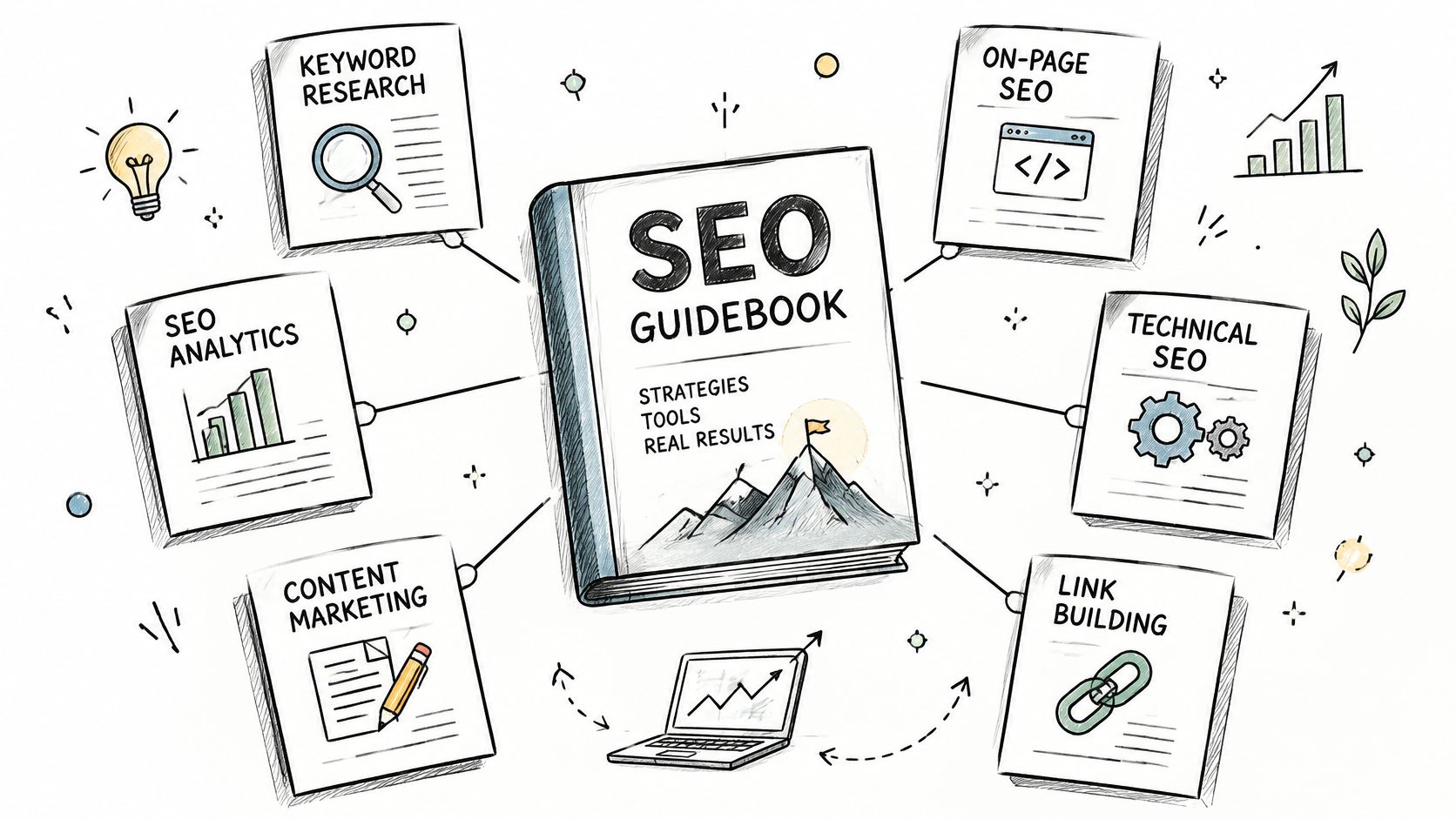
Practical application: Outline the supporting pages before expanding the overview. If a subtopic doesn't help the intended audience complete the main task, move it elsewhere or omit it.
Google's guidance for AI search features retains the importance of helpful, reliable, people-first content. That doesn't require turning every heading into a question. A narrative explanation, comparison, or descriptive heading can be clearer when the material calls for it.
Examples 5–6 Answer Questions and Support Claims
5. How Should an FAQ Answer Before Discussing Schema?
Target query and intent: “Should a newsletter signup page include a sample issue?” The reader needs a direct recommendation with a relevant qualification.
Before copy
Newsletter signup pages are an important part of digital marketing. Businesses should consider several factors when creating an effective newsletter signup page.
After copy
A newsletter signup page should usually include a representative sample when readers need help understanding what they'll receive. A sample can show the subject matter, tone, and depth more clearly than a vague promise.
If the sample contains customer information or material intended only for paying members, publish a suitable excerpt instead. Label it clearly and keep the signup promise consistent with the actual newsletter.
Schema commentary: The visible answer should remain useful without markup. Any structured data should accurately describe the page rather than introduce claims readers can't see.
Answer-first test: Removing the opening background paragraph should not remove the answer.
Strategic analysis: The rewrite offers editorial judgment, not a fabricated research finding. It makes a recommendation, explains the reasoning, and identifies a situation where the recommendation needs adjustment.
An FAQ should come from real uncertainty. Support messages, sales conversations, and reader replies can reveal questions worth answering, but adjacent wording variations don't automatically deserve separate sections.
Practical application: Group related questions and answer each directly before adding context. For implementation planning, consult the guide to schema markup for blog posts, then check current eligibility requirements before publishing.
Neither schema nor formatting guarantees rankings. A question heading doesn't establish expertise, and markup can't repair an incomplete answer. When the topic needs a chronological explanation or a comparison, forcing it into an FAQ can make it harder to follow.
The useful distinction is between answering a question and pursuing a search-result treatment. The former belongs in every relevant article. The latter depends on technical accuracy and current search-engine rules.
6. How Can a Case Study Separate Evidence From Promotion?
Target query and intent: “Does refreshing old blog content work?” The reader needs documented outcomes, intervention details, and limitations.
Before copy
Refreshing content dramatically improves SEO. Updating old posts is a proven way to multiply traffic and grow any business.
After copy
A self-published agency case study describes updating 50 existing pages instead of producing 100 new articles. Reported organic users increased from 12,000 at baseline to 87,400 after twelve months, while the intervention included updated statistics, closer search-intent alignment, and refreshed on-page information, according to the documented content-led SEO case study.
That outcome supports investigating existing pages, not promising the same result elsewhere. The report isn't a controlled experiment, so the change can't be assigned exclusively to the writing updates.
Evidence standard: Report what changed, what was measured, and what remains uncertain.
Strategic analysis: The weak passage turns a possible strategy into a universal promise. The improved evidence paragraph identifies the intervention and outcome while keeping the interpretation narrower than the headline.
For an original case study, the method matters as much as the result. Readers need to know which pages were selected, what changed, which measurement definitions were used, and whether other site work happened during the comparison period.

Practical application: Maintain an evidence log that distinguishes firsthand observations, primary data, interviews, and synthesis. Label missing information instead of filling it with plausible detail.
A shorter page containing a reproducible workflow and transparent limitations can provide more decision value than an expansive summary of common advice. Originality comes from defensible information, not merely a different arrangement of familiar sentences.
Examples 7–8 Define Terms and Protect Existing Content
7. How Can a Glossary Define a Term Without Creating a Dead End?
Target query and intent: “What is CTR in Google Search?” The reader needs a definition before interpretation.
Before copy
CTR is a vital SEO metric that businesses should optimize to maximize digital performance and improve online success.
After copy
Search click-through rate, or CTR, is clicks divided by impressions. It describes how often a displayed search result led to a click, using the definitions in Google's Search Console performance documentation.
For a shop's delivery-information page, CTR can help assess how searchers respond to the result. It doesn't establish whether visitors found the delivery policy useful or completed a purchase.
Suggested internal-link anchors: “Review search queries” for measurement guidance, “write a clearer page title” for result presentation, and “track newsletter signups” for business outcomes. These anchors should point to genuine relevant pages, not invented destinations.
Define the term first. Explain its limitations before recommending action.
Strategic analysis: The original wording assigns importance without conveying meaning. The rewrite gives the definition, a recognizable business context, and a boundary around interpretation.
A glossary entry should be understandable independently. Readers shouldn't need another glossary entry to decode its opening sentence, and the definition shouldn't hide beneath a history lesson.
Practical application: Collect unfamiliar terms from customer messages and editorial reviews. Give each entry a plain-language definition, a contextual example, and a useful onward route.
Internal linking works best when the anchor describes the destination. “Write a clearer page title” sets a more specific expectation than “learn more.” Still, extra links aren't automatically helpful: an entry should guide the next likely question rather than distribute readers across unrelated pages.
For measurement terms, precise definitions matter. A writer should preserve the distinction between search-result response, on-page usefulness, and business results instead of treating them as interchangeable signs of success.
8. How Can a Migration Guide Protect What Already Exists?
Target query and intent: “Move a WordPress blog without losing posts.” The reader needs a safe procedure and verification points.
Before copy
Export the old blog, import it into the new platform, and launch the new site. The migration is complete once the posts appear.
After copy
A migration isn't complete when article text becomes visible. Verify content, URLs, media, metadata, and reader journeys before replacing the live site.
Back up the source: Retain the export and associated media outside the destination platform.
Inventory existing URLs: Record important articles, images, signup pages, and other destinations.
Inspect the import: Check headings, links, image references, publication dates, and metadata against the original.
Map changed addresses: Record each old URL and its intended destination.
Test before launch: Check representative pages and conversion paths before changing DNS or public links.
Review after launch: Recheck redirects, missing content, and organic landing-page activity.
Migration priority: Preserve the reader's destination, not just the article's words.
Strategic analysis: The weak version describes data transfer but overlooks continuity. The improved version gives the publisher checkpoints and makes unfinished work visible.
A WordPress XML export is a starting format, not proof that every element has transferred correctly. Any platform-specific guide should name what was tested and distinguish supported imports from manually repaired content.
Practical application: Maintain a migration log with the old address, new address, verification status, and unresolved issue. The guide to preserving SEO during migration with 301 redirects provides a relevant reference for URL changes.
Avoid blanket promises about retaining rankings. Even a carefully documented migration requires monitoring, and a traffic change alone doesn't identify its cause. A trustworthy guide explains prevention, testing, and recovery without claiming that a checklist eliminates every risk.
SEO Writing Examples: 8-Format Comparison
These eight formats solve different reader problems, so choosing between them is a strategic decision. Match the format to the task first, then check whether your team can sustain it.
Content Type | Implementation Complexity | Resource Requirements | Expected Outcomes | Ideal Use Cases | Key Advantages |
|---|---|---|---|---|---|
Step-by-Step How-To Guide | Medium | Tested instructions, screenshots, periodic updates | Task-focused traffic and potential featured snippets | Explaining how to complete a specific task | Easy to scan, update, and repurpose |
Listicle or Best-of Roundup | Medium to High | Selection criteria, product research, regular fact-checking | Comparison traffic and commercial-intent engagement | Helping readers shortlist products or services | Scannable format with clear recommendations |
Head-to-Head Comparison (X vs. Y) | Medium to High | Consistent testing, verified pricing and feature details | High-intent traffic and support for purchase decisions | Readers choosing between named options | Directly answers buyer questions and builds trust through balanced analysis |
Ultimate Guide or Pillar Page | High | Extensive research, supporting articles, ongoing maintenance | Topical authority and sustained traffic | Covering a broad subject with multiple subtopics | Connects related content into a complete reference |
Question-and-Answer (FAQ) Article | Low to Medium | Audience questions, concise research, occasional updates | Direct answers, conversational-search visibility, fewer support queries | Addressing recurring questions on a focused topic | Easy to expand and quick for readers to scan |
Original Data or Case Study Post | High | Original dataset, sound methodology, charts, analysis | Citations, backlinks, and evidence-based credibility | Sharing research, experiments, or client results | Produces distinctive evidence that is difficult to replicate |
Glossary or Definition Page | Low to Medium | Accurate definitions, examples, internal links | Definition-query traffic and stronger internal-link structure | Explaining industry terms or concepts | A low-cost way to support readers and tie related content together |
Platform Migration Guide | High | Verified export and import steps, backups, technical checks, updates | High-intent traffic and fewer migration-related support requests | Helping users move a site or publication between platforms | Addresses migration risks with practical checklists and instructions |
Complexity ratings assume a small team without dedicated developers. Original research and pillar pages cost less to run once you already publish studies or maintain a content hub, so treat the ratings as starting points rather than fixed budgets.
Apply These SEO Rewrites to Your Next Page
The strongest SEO writing examples solve different problems rather than repeating the same keyword advice. How-to guides improve task sequencing; roundups expose selection criteria; comparisons replace blanket winners with conditional recommendations; pillar pages clarify hierarchy.
FAQs combine direct answers with restrained schema use; case studies separate evidence from unsupported claims; glossaries define before expanding; migration guides preserve URLs and metadata. The appropriate format depends on what the reader needs to accomplish.
A practical editing pass should include these checks:
Identify the intent: Choose the main task the page should satisfy.
Answer immediately: Put the useful response before background.
Remove repetition: Keep relevant terms where they clarify meaning.
Describe each section: Make headings accurately summarize their contents.
Connect useful pages: Add internal links at genuine decision points.
Verify claims: Check sources, product details, dates, and limitations.
Write accurate metadata: Create a distinct title tag and a truthful meta description.
Validate markup: Match structured data to visible content and current eligibility rules.
For the earlier newsletter tutorial, a concrete metadata rewrite would look like this:
Before title tag: Newsletter Tips and Newsletter Ideas
After title tag: How to Start a Customer Newsletter
Before meta description: Discover the best newsletter advice for newsletter success.
After meta description: Plan a customer newsletter, prepare the signup form, write a welcome email, and test delivery before promoting it.
The title tag and H1 serve different roles: the title tag helps describe the page in search contexts, while the H1 introduces the visible page. Their wording can align without being identical. Google's SEO Starter Guide explains clear titles and search-result presentation; search engines may generate different title links or snippets, so metadata isn't guaranteed display copy.
Google stopped showing FAQ rich results in Search in May 2026, so FAQ markup shouldn't be added in pursuit of a search-result treatment. HowTo rich results shouldn't be promised, and current implementation requirements should be checked through Google Search Central.
An SEO content brief example can help organize the reader's task, evidence requirements, and intended next action before editing begins. The brief still needs editorial judgment rather than automatic acceptance of every suggested section.
The next practical step is revising an existing page, recording its changes and publication date, then monitoring relevant Search Console queries, impressions, clicks, and reader actions. Compare equivalent periods where possible, account for other changes, and don't claim causation from a simple before-and-after comparison.
VeloCMS brings blogging, newsletters, memberships, and site theming into a subscription-based content management platform, with AI-assisted editing and SEO tools. Publishers applying these rewrites can visit VeloCMS to assess whether its publishing workflow fits their site and newsletter needs.