Ghost alternative · Oct 26, 2026
10 Ghost Alternative Platforms Compared for 2026
What if the cheapest Ghost Alternative on day one becomes the most expensive one once readers start paying? That's the gap most comparison lists miss. They rank editors and themes, then leave the fee maths, the extra tools, and the exit route for later. No single platform replaces Ghost for everyone

What if the cheapest Ghost Alternative on day one becomes the most expensive one once readers start paying? That's the gap most comparison lists miss. They rank editors and themes, then leave the fee maths, the extra tools, and the exit route for later. No single platform replaces Ghost for everyone. The right choice depends on whether the job is a full website or mainly a newsletter, how money comes in, and how many separate services a small team is willing to run.
Ghost sets a high bar. It launched on Kickstarter in April 2013, and it reached profitability in December 2014. The Ghost(Pro) pricing table lists annual-billing prices of $18, $29, and $199 per month, plus a custom plan, with member allowances that rise with the plan. Any replacement has to beat that deal on total cost, not just on a headline price.
This list sorts 10 options by how each platform earns money, how much assembly it still requires, and how easily a publisher can leave. Prices and fees change often, so current figures should be confirmed on each provider's site before committing. Readers who are also selling downloads can compare 10 selling tools with AmaJova alongside the publishing choices below. Start with the revenue model, then check the migration path before picking.
Table of Contents
1. VeloCMS
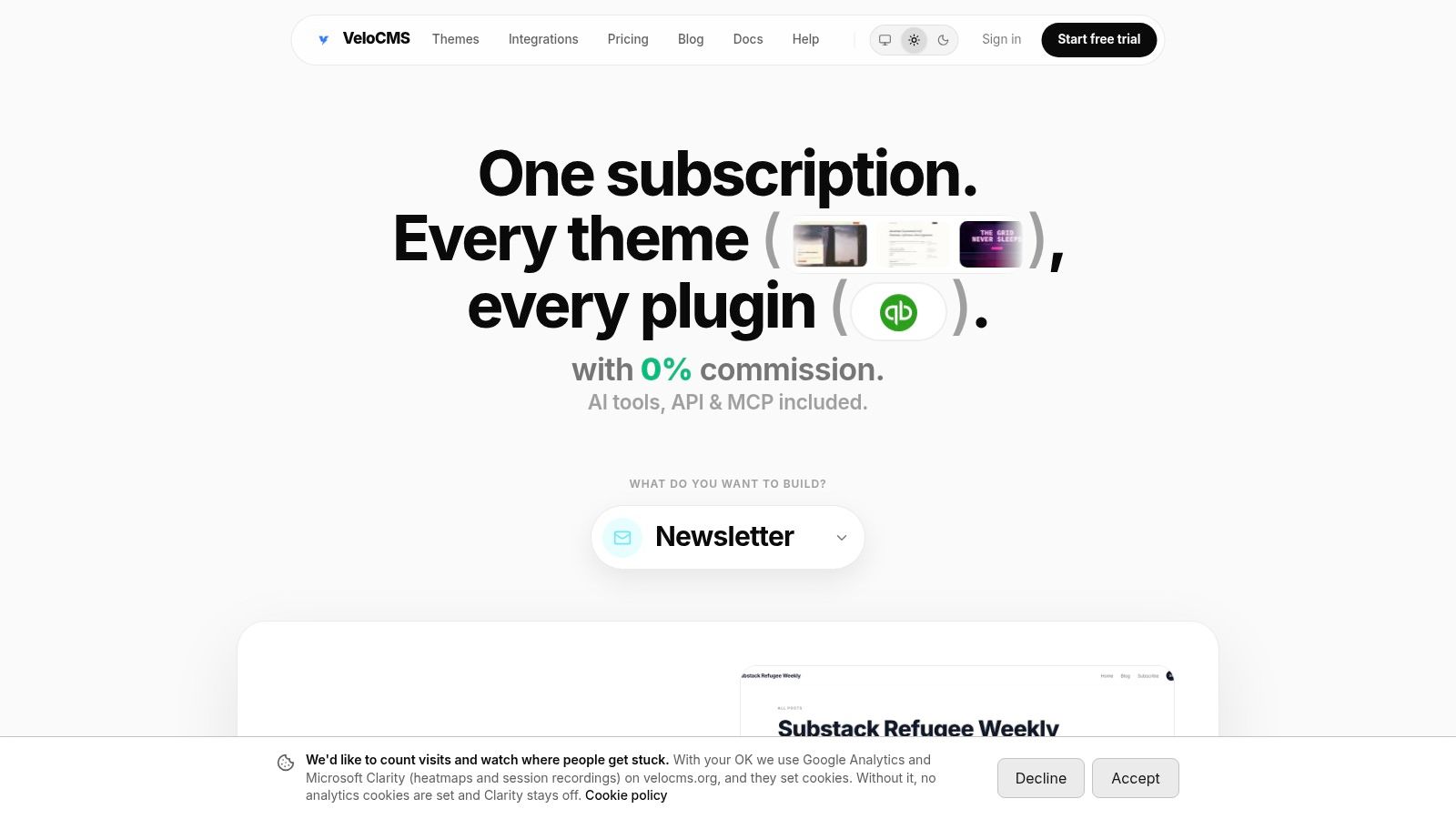
VeloCMS combines blogging, newsletters, memberships, commerce, themes, and AI-assisted SEO in one subscription. It suits publishers who want fewer separate services to configure and maintain. Plan differences focus on team size, API access, and branding rather than separating core features into add-ons.
Publishing, email, and money in one place
The block editor offers AI rewrites and slash commands. Live SEO scoring provides schema guidance and content-gap hints as you write. Built-in email includes segments, tags, and automations, while paid memberships and commerce carry 0% platform commission. Payment processing fees still apply.
Themes: The library includes 40 reader themes, all included in every plan.
Integrations: Connect Kit, Mailchimp, and Zapier, or use API access and webhooks for custom workflows.
Migration and portability: Import content from WordPress, Squarespace, Substack, Ghost, and Medium. Export posts, members, subscribers, and media as Markdown, JSON, and CSV.
There is no free plan, but every paid plan starts with a 14-day free trial. Check the VeloCMS pricing page for current plan details.
Migration check: Import a Ghost JSON export during the trial. Confirm that authors, tags, feature images, and member records came across before connecting your domain.
Limitation: Publishers looking for a permanent free tier will need another option, since VeloCMS offers a trial rather than a free plan.
2. WordPress.com
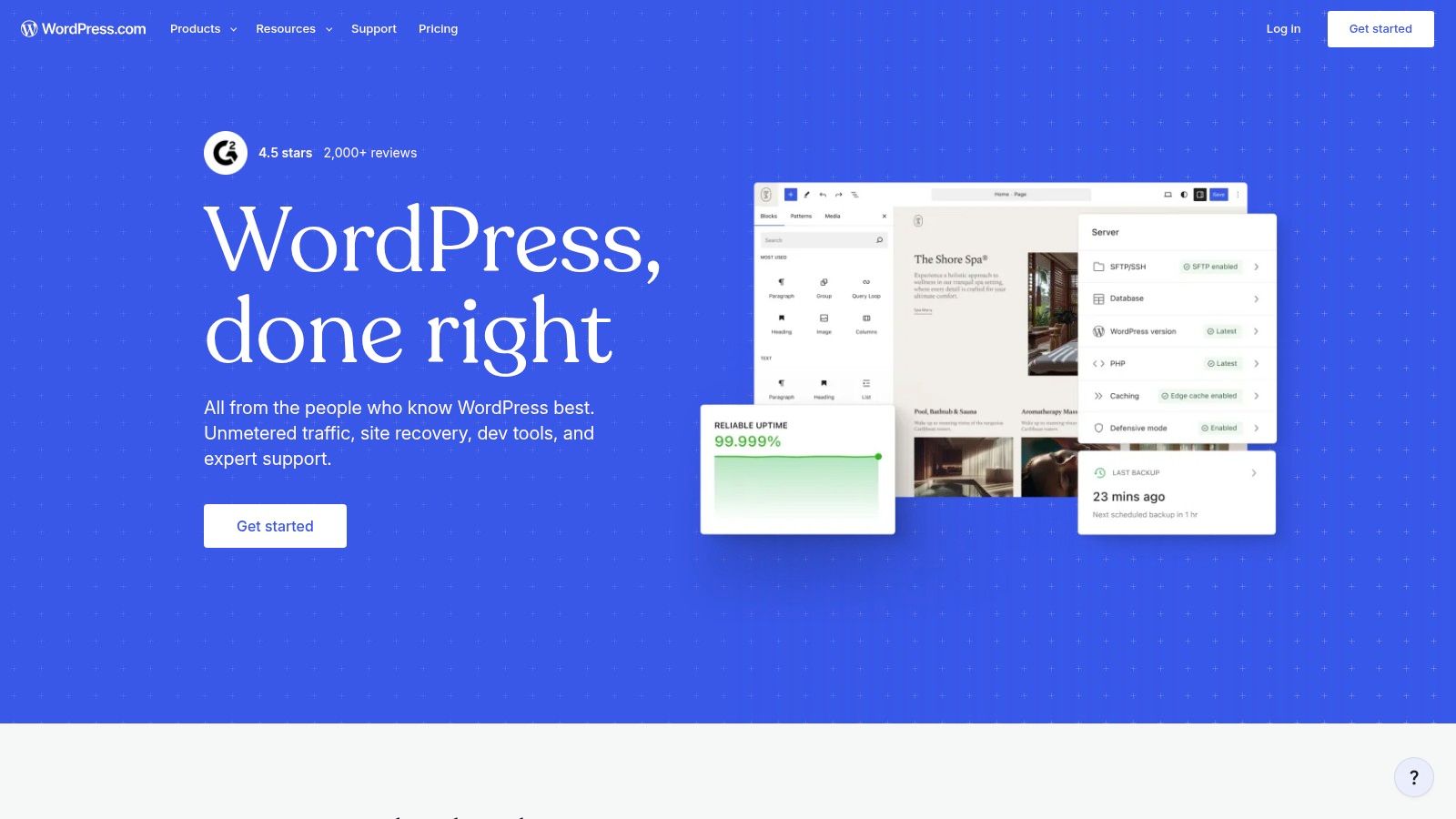
WordPress.com is the managed route into WordPress. Hosting, automatic updates, posts, pages, and user permissions are handled, and paid plans enable plugin installation. For a content-heavy site that may grow into something unusual later, that plugin ecosystem is the main reason to choose it over a tighter publishing tool.
The trade-off is assembly. Built-in newsletters, RSS, paid-subscriber tools, and paywall options cover the basics, but recreating Ghost's combined publishing, email, membership, and SEO setup usually means adding plugins or outside services. Each addition brings its own settings, renewal, and compatibility risk. Paid-newsletter platform fees also vary by plan, on top of Stripe processing, so the actual cost depends on the tier chosen.
Strength: Flexibility for sites that need specialized features no single product covers.
Strength: Managed hosting removes server maintenance from a small team's week.
Watch out: Plugin-based setups add cost and upkeep that don't show in the headline plan price.
Limitation: Email, membership, and SEO depth may all require separate tools, which recreates the patchwork many Ghost users left WordPress to escape.
Migration check: Import a sample of Ghost posts first and verify slugs, authors, and feature images before committing to a plugin stack built around them.
Publishers who already know WordPress, or who expect to need an obscure integration within a year, will feel at home. Publishers who want one bill and one support desk probably won't.
3. Substack
Substack removes almost every operational decision. A writer publishes a post, it appears on the web, and it lands in subscribers' inboxes. Free and paid subscriptions run on monthly and annual pricing, podcasts and private podcast feeds are built in, and the reader network gives new publications a discovery surface they wouldn't have on a standalone site.
That simplicity has a price that grows with success. Substack takes 10% of paid subscription revenue, plus payment-processing fees. A publication earning very little barely notices. A publication with a healthy paid tier hands over a tenth of gross revenue every month, forever, which is why the break-even comparison in the Substack, Ghost, and beehiiv revenue breakdown is worth running with real numbers before settling.
Where the walls show
Site and brand customization stay constrained compared with a full CMS. There's no real route to building a broader business website, a course catalogue, or custom landing pages around the newsletter. The publication lives inside Substack's design language and reader experience.
Limitation: The platform suits a newsletter with a web archive, not a publisher who needs a site that does several jobs.
Migration check: Export the subscriber list and confirm paid subscribers can be moved without forcing readers to re-enter payment details on the next platform. Test that before announcing a move, because a clumsy payment transfer is where paid churn happens.
4. beehiiv
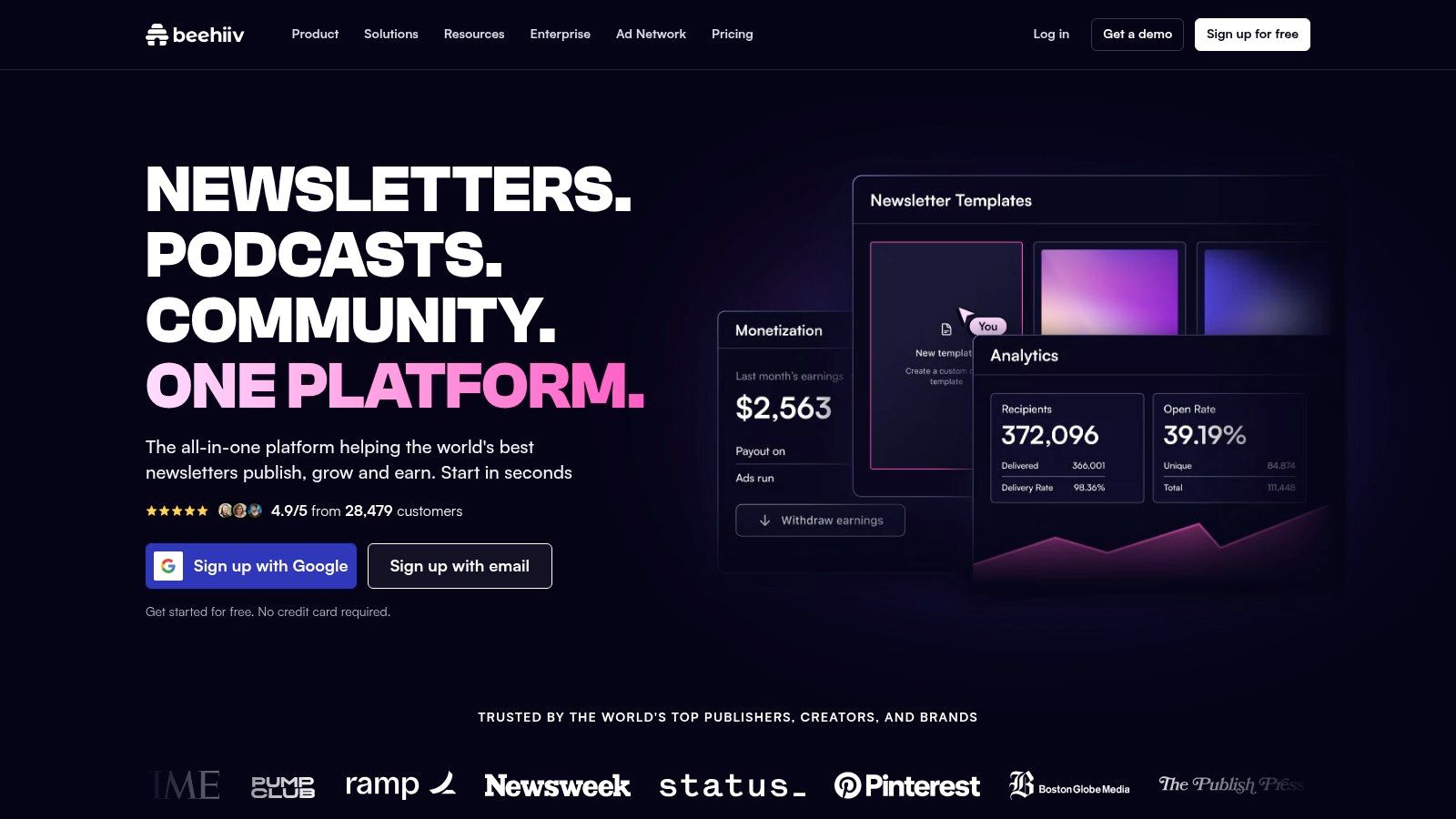
A newsletter that runs on flat pricing reads differently from one built on revenue share. beehiiv is aimed at operators who care about growing the list and turning that growth into income. It combines newsletter publishing, a website, campaign analytics, recommendations, and referrals, with paid subscriptions, digital products, automations, and advertising features on paid plans.
The economics are the clearest contrast with a revenue-share model. Costs arrive as a predictable subscription instead of a percentage skimmed from every sale, though payment processing still applies on top. Plan limits scale with list size and billing choice, so the honest comparison is the monthly fee at the subscriber count a publication expects to reach, not the free tier it starts on.
Growth tools: Recommendations and referrals let publications trade audiences with similar newsletters.
Monetization tools: Paid subscriptions, digital products, and advertising features sit inside the same account.
Cost shape: Flat plan pricing, with limits tied to scale and billing choice.
Limitation: It's newsletter-led, not a full CMS replacement for a complex site with custom content structures, multiple sections, or heavy page design. Advanced tools also require a paid plan, so the free tier is a starting point, not the finished setup.
Migration check: Import a slice of the Ghost archive and confirm that post formatting, images, and subscriber tags map cleanly, then check how the website side handles older posts that were written for the web rather than the inbox.
5. Squarespace
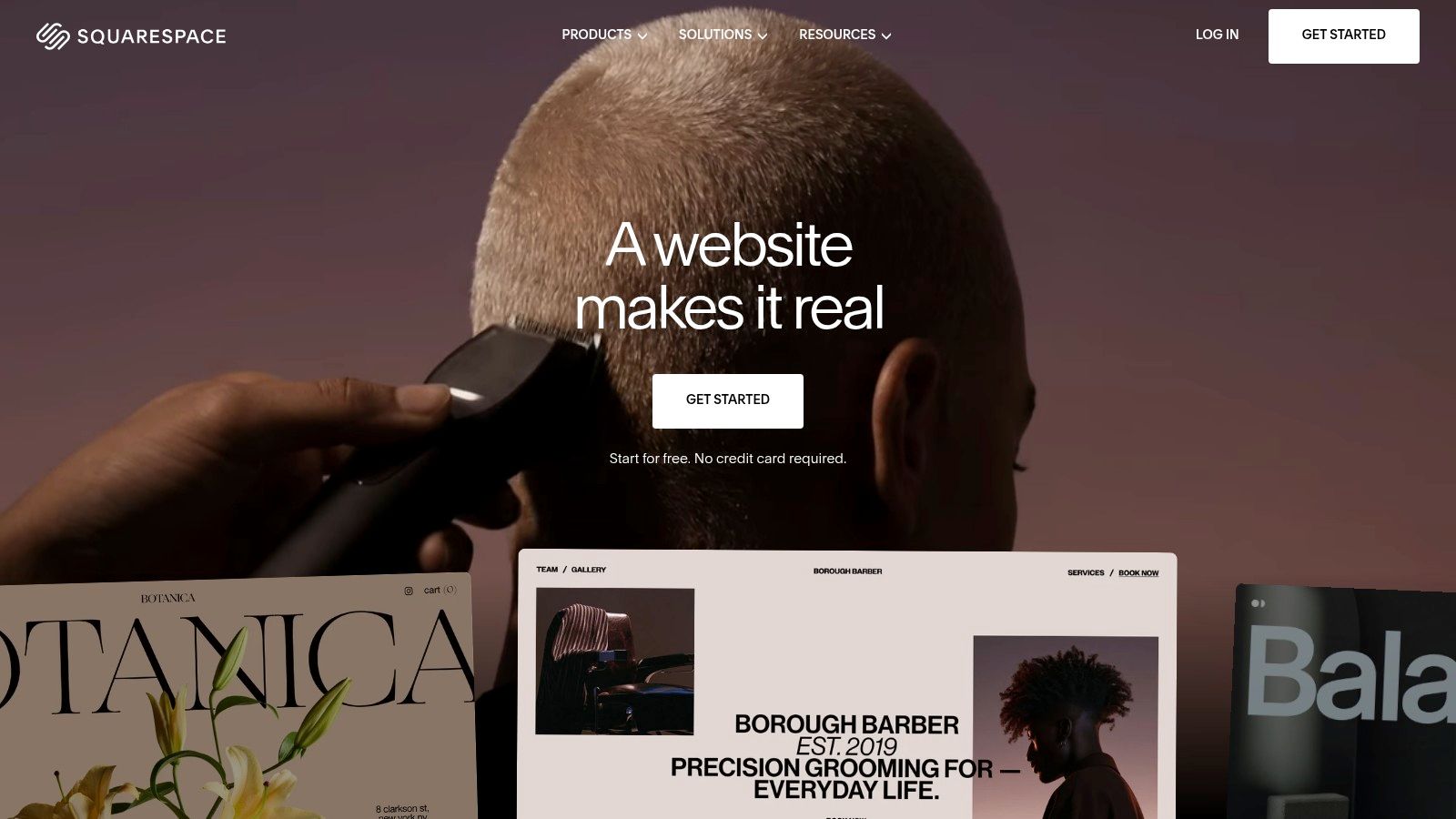
Squarespace leads with presentation. Professionally designed templates, built-in hosting, blogging, and newsletter sign-up blocks come as one managed product, and the same account can sell products, services, courses, and memberships. For a creator or small business where the site itself is the shopfront, that cohesion is genuinely useful.
Annual plans include a free domain for the first year, subject to terms, and current plans add built-in analytics and AI tools. The catch sits in the transaction layer. Membership and commerce transaction fees vary by plan, so a publisher selling member access needs to model the fee on expected sales, not just compare monthly plan prices.
The email question
Sign-up blocks collect addresses. That isn't the same as running a publication-grade newsletter operation. Publishers who rely on segmentation, automation, or frequent sends should test the email features hard against their actual workflow, because a dedicated newsletter platform may still be needed on top.
Limitation: It's less extensible than WordPress for specialized needs, and the email side may not replace a tool built for publishing by inbox.
Migration check: Move a few image-heavy Ghost posts across and inspect formatting, captions, and URLs, since visual templates can quietly change how archive content presents.
Squarespace fits businesses that publish to support selling. It fits less well when publishing is the business.
6. Wix
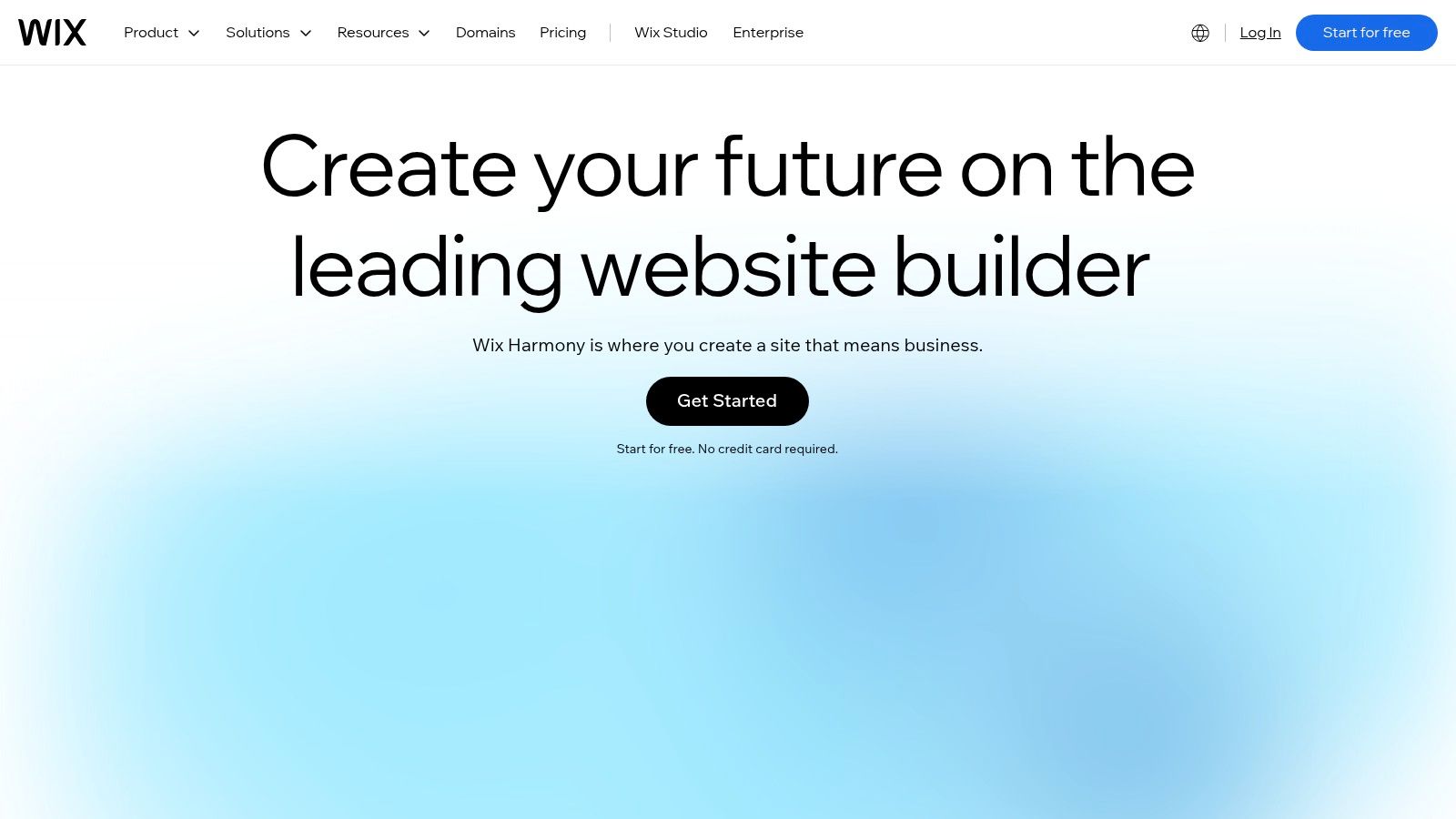
Wix is a hosted builder for people who want to assemble a multipurpose site visually and never think about hosting. The drag-and-drop builder, templates, and AI site-creation tools sit alongside blogging with categories, SEO tools, and subscriber options. Paid plans support payment acceptance, with higher tiers adding business and commerce capacity, and a free plan exists for trying the builder.
That breadth is both the appeal and the problem for a Ghost publisher. A blog inside a general website builder doesn't automatically form one unified workflow with the newsletter. Email-marketing allowances and features need checking separately, because what's included for the website and what's included for sending aren't always the same conversation. Anyone weighing the reverse move can read about moving a Wix blog without downloading a backup to understand what leaving looks like.
Strength: Accessible for nontechnical users building a site that does several jobs.
Strength: Broad template library and business features in one account.
Watch out: A visual builder can be less flexible than a CMS for custom editorial workflows at volume.
Limitation: High-frequency publishing teams may find the editorial side slower than a writing-first tool.
Migration check: Rebuild two or three representative Ghost posts and confirm headings, embeds, and metadata survive, then check what an export contains if the site ever needs to leave.
7. Kit
Kit, formerly ConvertKit, isn't a CMS at all, and that's exactly why it belongs on a list sorted by assembly. Kit replaces the email-growth and marketing layer of a Ghost setup, forms, landing pages, broadcasts, sequences, visual automations, tagging, and segmentation, while something else still has to be the website.
For creators whose business runs on launches, sequences, and segmented offers, that depth beats the email features inside most publishing platforms. Digital products and subscription sales are built in, with a transaction fee on those sales, Kit's recommendations network enables cross-promotion between creators, and listed paid-plan features include integrations and API access. Publishers comparing email-first tools can also review the route for moving a newsletter from Mailchimp, Kit, or beehiiv before deciding where the list should live.
What still needs buying
A separate website or CMS remains necessary for a proper editorial archive. Paid plans also scale with subscriber count, so list growth raises the bill even when revenue doesn't follow at the same pace. Configuration takes more effort than an all-in-one platform, because the automation power only pays off once someone designs the sequences.
Limitation: Kit solves email marketing well and publishing barely at all, so the total stack cost is Kit plus whatever hosts the content.
Migration check: Export tags and segments with the subscriber list, since an address list without its tagging history loses most of what made the Kit setup valuable.
8. Patreon
Patreon starts from the opposite end. Instead of a website that added memberships, it's a membership platform that added posts, email newsletters, chats, comments, and direct messages. Monthly and annual memberships, tiers, and one-time payments run alongside creator analytics, podcast imports and feeds, and Spotify integration.
There's no upfront cost to start offering memberships, which makes it a low-risk way to test whether an audience will pay at all. Email lists are exportable, so the audience relationship isn't fully trapped. For podcasters and media creators whose community interaction matters as much as the content, the bundled chats and comments remove another tool from the stack.
The ongoing cost is the counterweight. New creator pages are generally subject to a 10% platform fee, plus processing and other applicable fees, and fees and capabilities can vary by plan, payment method, and currency. Like any revenue share, it feels painless at small numbers and expensive at large ones.
Strength: Memberships, community, and content bundled with no starting cost.
Strength: Podcast feeds and Spotify integration suit audio-led creators.
Watch out: Membership pages give far less control than a standalone website.
Limitation: It isn't a search-optimized editorial website, and it won't build a durable owned archive.
Migration check: Confirm exactly what the member export contains, especially tier and billing status fields, before relying on it as an exit route.
9. Buttondown
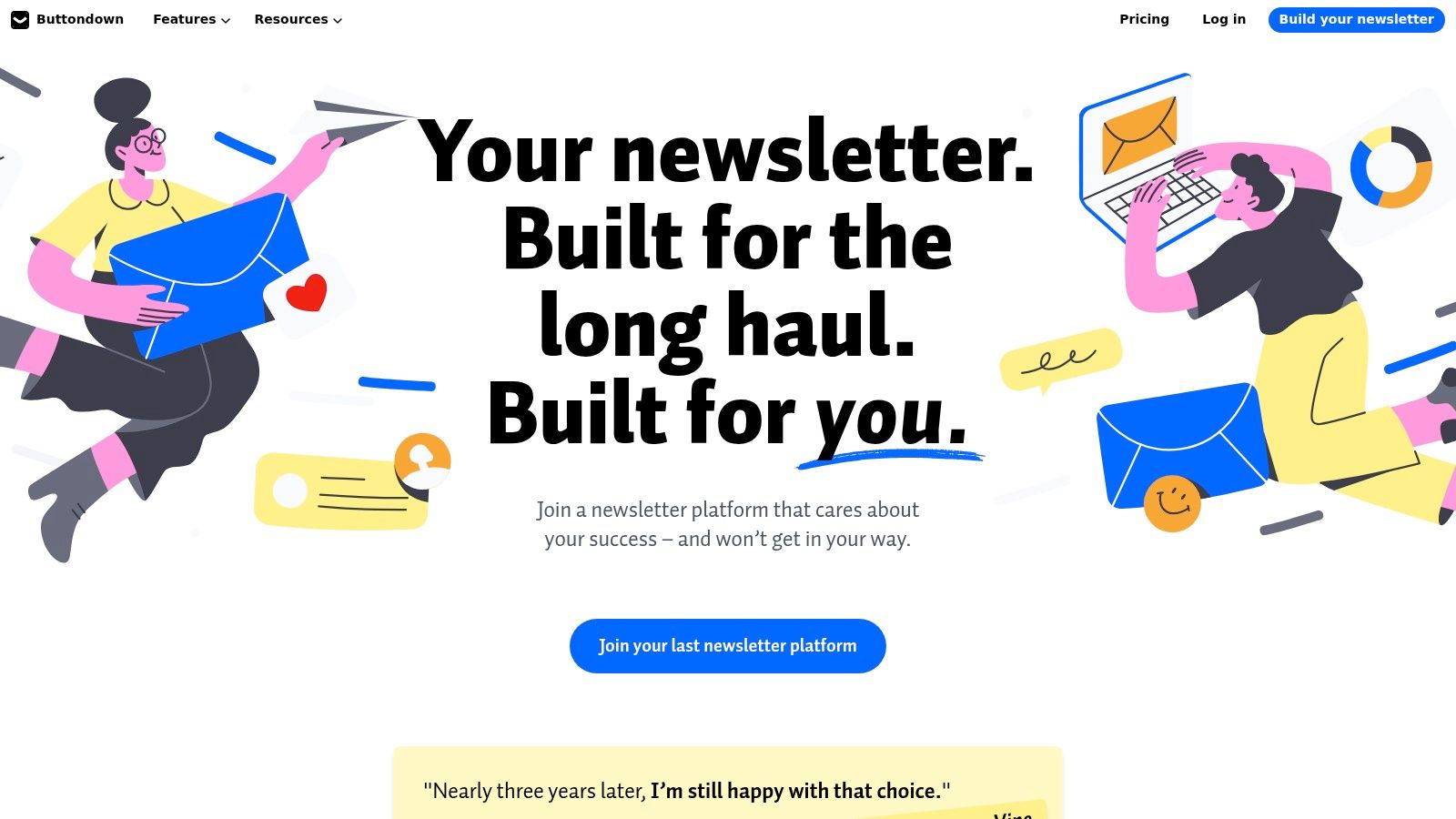
Some writers don't want a platform. They want a text editor that sends email. Buttondown is that tool, with rich-text or Markdown editing, hosted archives, a custom sending domain, and a privacy-oriented position. Optional tagging, segmentation, paid subscriptions, analytics, and automation can be added, and RSS-to-email and sponsorship features exist as add-ons.
It's free for the first 100 subscribers, which suits a writer testing an idea but runs out quickly for a publication with an established Ghost audience. The modular model is honest, though. Publishers select the capabilities they need instead of renting a large marketing suite they'll mostly ignore.
A small tool that does the sending job plainly beats a large suite that nobody on a two-person team has time to configure.
Limitation: Add-ons raise the total cost as requirements expand, and Buttondown isn't a full website CMS or a complete membership platform. A publisher who needs pages, custom site structure, or gated web content will outgrow it or pair it with something else.
Migration check: Import the Ghost subscriber export and send a test issue, then check how the hosted archive handles older posts, because the archive is the only website most readers will ever see. Also confirm the paid-subscription setup before promising existing paying members a smooth transfer, since billing continuity matters more than post formatting for revenue retention.
10. Webflow
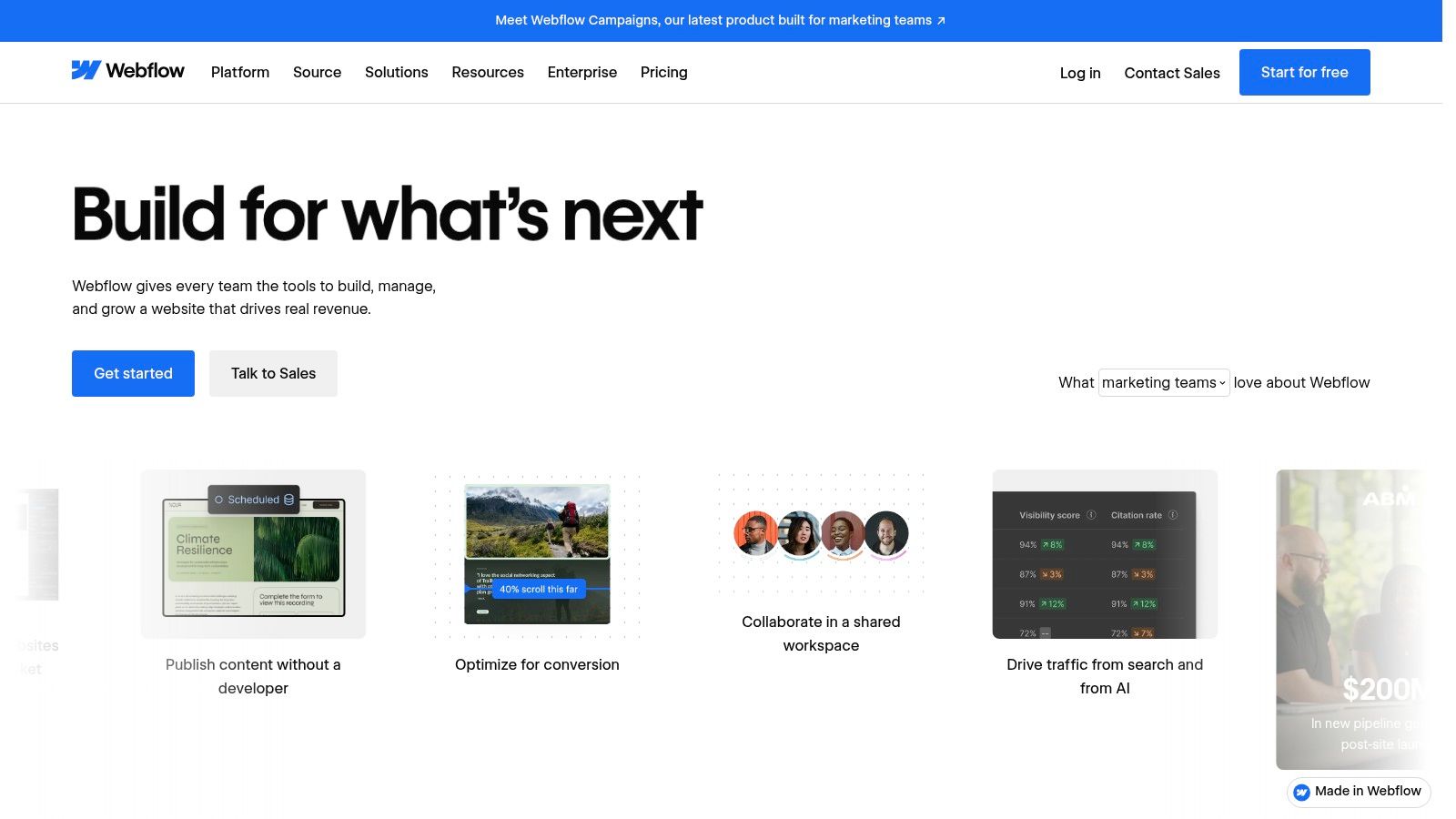
Webflow is the designer's answer. Its visual site design tools and CMS support custom content structures and visually distinctive publications that template-based platforms can't match. A free Starter option allows experimentation, paid site plans add custom domains and publishing, and higher plans add team, API, localization, and governance tools. Site plans stay separate from workspace collaboration plans, which keeps the pricing structure legible.
The assembly bill is the catch. Newsletter sending and paid memberships generally require additional services, so a Ghost publisher moving to Webflow is really choosing Webflow plus an email tool plus a membership layer. Each piece works, but three vendors now own parts of one reader relationship.
Who pays the learning cost
Webflow rewards people who think in layouts. Writers often don't. It's more involved to learn than a straightforward writing platform, and costs rise with site needs, add-ons, and team requirements. A publication with a designer on staff absorbs that easily. A solo writer pays for it in hours.
Limitation: Design control is the product, so publishing speed and built-in audience tools take second place.
Migration check: Map Ghost posts, tags, and authors into Webflow CMS collections on a small sample first, and confirm redirect handling for every old URL before the full archive moves.
Ghost alternatives at a glance
Ten platforms, judged on the three things that decide whether a switch works: how each one earns its money, how much of the toolkit arrives in the box, and how much it takes from paid revenue. Fee rows show the platform's own cut. Card processing through Stripe or a similar gateway sits on top of most of them.
Item | Free option or trial | Fee on paid revenue | Best for |
|---|---|---|---|
VeloCMS | 14-day trial; no free plan | 0% platform commission | All-in-one publishing, newsletters, memberships, commerce, and SEO |
WordPress.com | Free plan available | Transaction fees on payments that shrink as plan tier rises; Stripe processing applies throughout | Content-heavy sites that need flexibility and plugins |
Substack | Free publishing available | 10% of paid subscription revenue, plus processing fees | Writers seeking a simple newsletter and reader network |
beehiiv | Free Launch plan for up to 2,500 subscribers | 0% platform commission; payment processing applies | Newsletter operators focused on growth and monetization |
Squarespace | Free trial; no permanent free plan | Transaction fees on memberships and commerce, set by plan tier | Creators and small businesses prioritizing visual design |
Wix | Free plan available | Payment processing applies; check plan terms for other fees | Nontechnical users building multipurpose websites |
Kit | Free plan available | Paid plans scale with subscriber count, plus a transaction fee on product and subscription sales | Creators seeking email marketing, automation, and segmentation |
Patreon | No upfront cost to start memberships | Generally 10% for new creator pages, plus applicable fees | Creators offering memberships and community content |
Buttondown | Free for the first 100 subscribers | Flat monthly pricing; add-ons raise total cost as features are added | Writers who want a lightweight newsletter workflow |
Webflow | Free Starter option | No platform revenue cut; newsletter and membership tools are separate paid services | Designers and teams needing detailed website design control |
Two money models sit inside this table. Substack and Patreon take a share of what readers pay you, so their cost grows alongside your success. The rest charge flat subscriptions, where the variable that matters most is how many outside tools you still have to assemble to match what Ghost does alone.
Choosing a Ghost Alternative You Can Leave Later
Ghost is not a fringe tool that a replacement can treat casually. The Ghost company page reports more than 100 million cumulative installations and over 30,000 active customers, while W3Techs technology data for Ghost puts it at approximately 0.1% of websites whose CMS is identifiable, with 74.7% of identified Ghost installations on version 6. That's a concentrated, current, technically capable audience. An importer that handles current Ghost JSON, membership fields, tags, authors, and images properly matters more than broad claims about compatibility.
Satisfaction sets the same kind of bar. The SelectHub profile for Ghost places user satisfaction at 89%, based on 90 reviews from two recognized software-review sites. A replacement doesn't win by being cheaper while being worse to write in. Editor usability, publishing reliability, email deliverability, and export completeness each need testing separately, because a good average can hide one broken workflow that a team uses every day.
Check the site quality that survives the move
Most comparisons stop at features and price, then ignore what migration does to search and accessibility. The SWAT SEO audit statistics roundup reports that 74% of audited small-business websites had at least one critical technical SEO error. A move that drops canonical tags, breaks heading order, or loses alt text creates exactly those defects. Test redirects, structured data, keyboard navigation, and page speed on imported posts, not on a clean demo page.
Email deserves the same scrutiny. The Ghost newsletter documentation notes that Ghost(Pro) handles delivery automatically while self-hosted installs must configure Mailgun, the supported bulk-email provider. Any replacement should be asked the same plain question: who sends the mail, and what happens to deliverability when the list grows.
Model the money before the move
The creator platform pricing research frames the core trade-off as fixed subscriptions against revenue-sharing fees, with Ghost associated with 0% platform fees but a recurring cost that rises with the plan required. Run three cases before choosing, a free audience, a modest paid tier, and high email volume, and include processing fees, team seats, migration labor, and the extra tools each option still needs. A percentage fee that looks trivial at launch can exceed a flat subscription within a year of steady growth.
Finally, test the exit while leaving is still free. The Ghost export help page describes exporting posts, pages, tags, tiers, and settings as JSON, with member records as CSV in a single ZIP file. Download that export, open it, and import a few posts and members into the shortlisted platform. Send a test newsletter to a personal address. Check canonical URLs and publication dates. If VeloCMS makes the shortlist, the 14-day trial is the window to test its Ghost importer and email delivery with a real list segment, and VeloCMS allows users to cancel their subscription if the fit isn't there.
The best Ghost Alternative matches how a publication earns, needs the fewest extra tools to do the whole job, and hands content and audience data back without an argument. Anything less is a cheaper-looking way to rebuild the same problem.
Readers who want blogging, newsletters, memberships, and commerce under one subscription, with 0% platform commission and portable exports, can start the 14-day free trial and test a real Ghost import before paying. Visit VeloCMS to run that test with actual posts and subscribers, then keep it only if the numbers and the workflow hold up.