creator monetization platform · Oct 29, 2026
Creator Monetization Platform Compared: 10 Options for 2026
If a platform keeps a percentage of every sale, why compare options by monthly price alone? The right creator monetization platform depends on whether you need a full website or just a newsletter and tip page, the revenue you expect, and the fees that reduce it. A low headline price can rise once pl

If a platform keeps a percentage of every sale, why compare options by monthly price alone? The right creator monetization platform depends on whether you need a full website or just a newsletter and tip page, the revenue you expect, and the fees that reduce it. A low headline price can rise once platform commission, payment processing, plan tiers, and separate email or theme tools enter the calculation.
Most creators are not starting with professional-level income. In a September 2023 Statista survey, more than 70% of content creators reported generating less than $500 in revenue over the prior 12 months, while only 4% reported earning between $10,000 and $50,000. At $500 a year, a separate email service can take a noticeable share of the margin. At $50,000 a year, a 10% commission amounts to $5,000.
How to read the fees below
Compare each option on three points: its platform fee, any payment-processing charges, and the tools you must assemble separately. A 0% platform fee still leaves Stripe or PayPal processing fees, while a free plan does not necessarily make selling free.
The ten options below cover blogs, newsletters, and small-business sites, from full publishing systems to simple supporter pages. The practical trade-off is what you keep from each sale and how much you must set up around the platform.
Table of Contents
1. VeloCMS
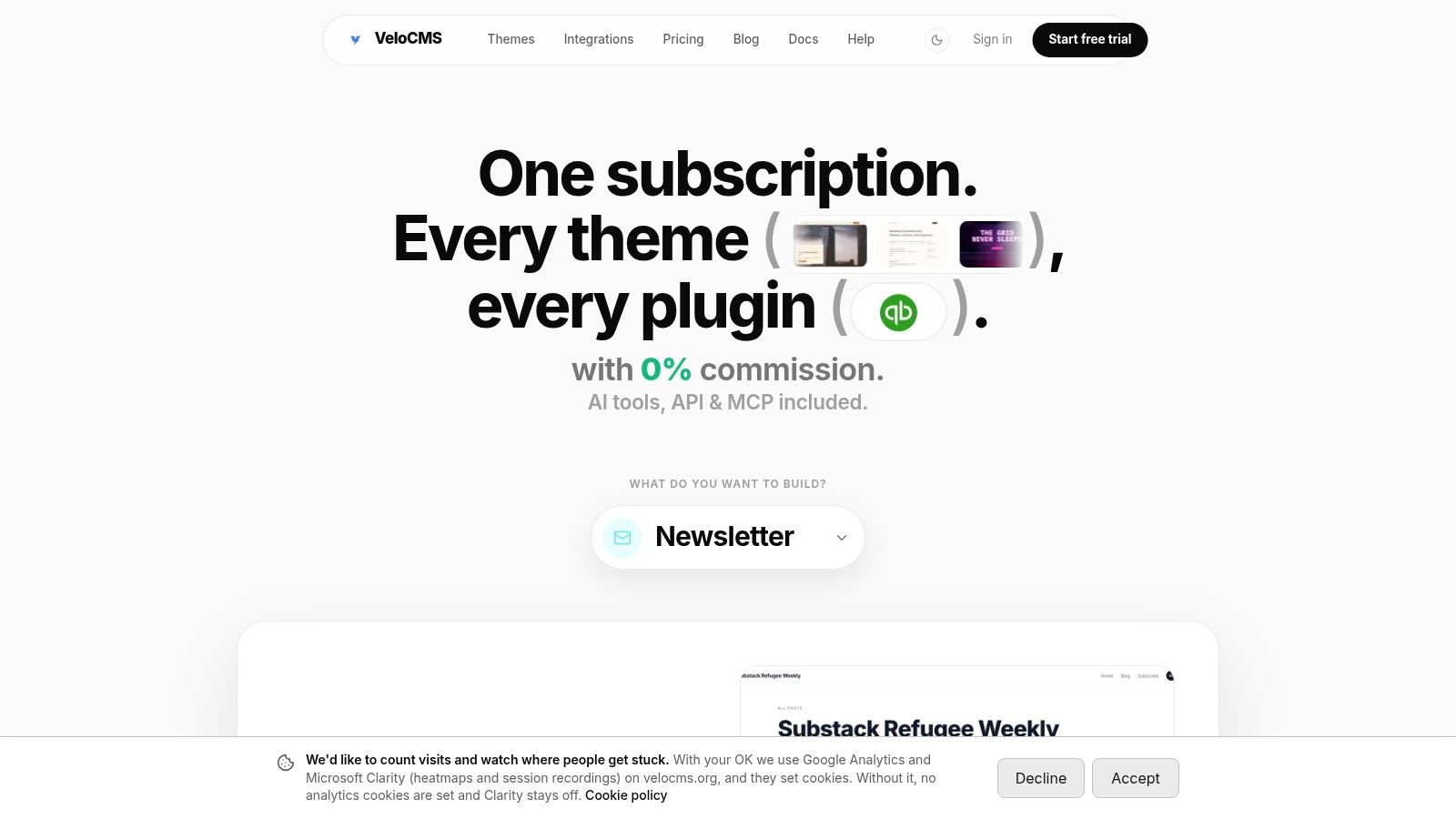
VeloCMS charges 0% platform commission, but it has no free plan. Plans start with a 14-day free trial, and pricing is $9/month for Pro, $29/month for Business, and $69/month for Agency, billed in USD via Stripe. Monetization features require a supported payment provider, and availability varies by country. Payment processing fees still apply. The trade-off is a predictable subscription rather than a percentage of sales, so compare the monthly bill with current revenue and any tools the platform replaces.
What gets replaced
VeloCMS combines blogging, newsletters, paid memberships, and native commerce in a hosted platform for creating, publishing, and monetizing content. Native sales include digital products, paywalled posts, and paid newsletter tiers through BYOK Stripe, with a 0% platform fee and Stripe processing fees applying. Built-in email delivery, audience segments and automations, and connectors for Kit and Mailchimp keep common publishing tasks together. API access and webhooks are also available, which lets Zapier or Make connect other tools.
The block editor supports AI rewrites and slash commands. Live SEO scoring provides schema guidance and content-gap hints while you write.
Publishing and SEO: Editing, AI assistance, and SEO feedback sit in the same workflow as the post.
Monetization: Native memberships and paywalled content avoid the need for a separate paywall plugin. Access levels are managed on the platform.
Design: The themes library includes 40+ reader themes, with custom themes also supported.
Migration: Importers cover WordPress, Squarespace, Substack, Ghost, and Medium. Posts, members, subscribers, and attachments can be exported in portable Markdown and JSON formats.
Before moving, check whether the available import tools and themes fit your current setup. VeloCMS provides an interactive admin demo and 76 head-to-head comparison pages through the VeloCMS comparison hub. Its stated desktop LCP target is 0.8 seconds, a target rather than an independently published measurement.
Fee rule: A flat subscription pays off when the revenue retained, or costs saved on plugins and email tools, outweighs the monthly bill. Base that decision on current revenue, not hoped-for growth.
For creators who want a branded site, newsletter, memberships, and product sales without assembling a CMS, email service, and add-ons, VeloCMS puts those tools under one subscription. A creator who only needs a tip link may prefer a simpler option.
2. Ghost
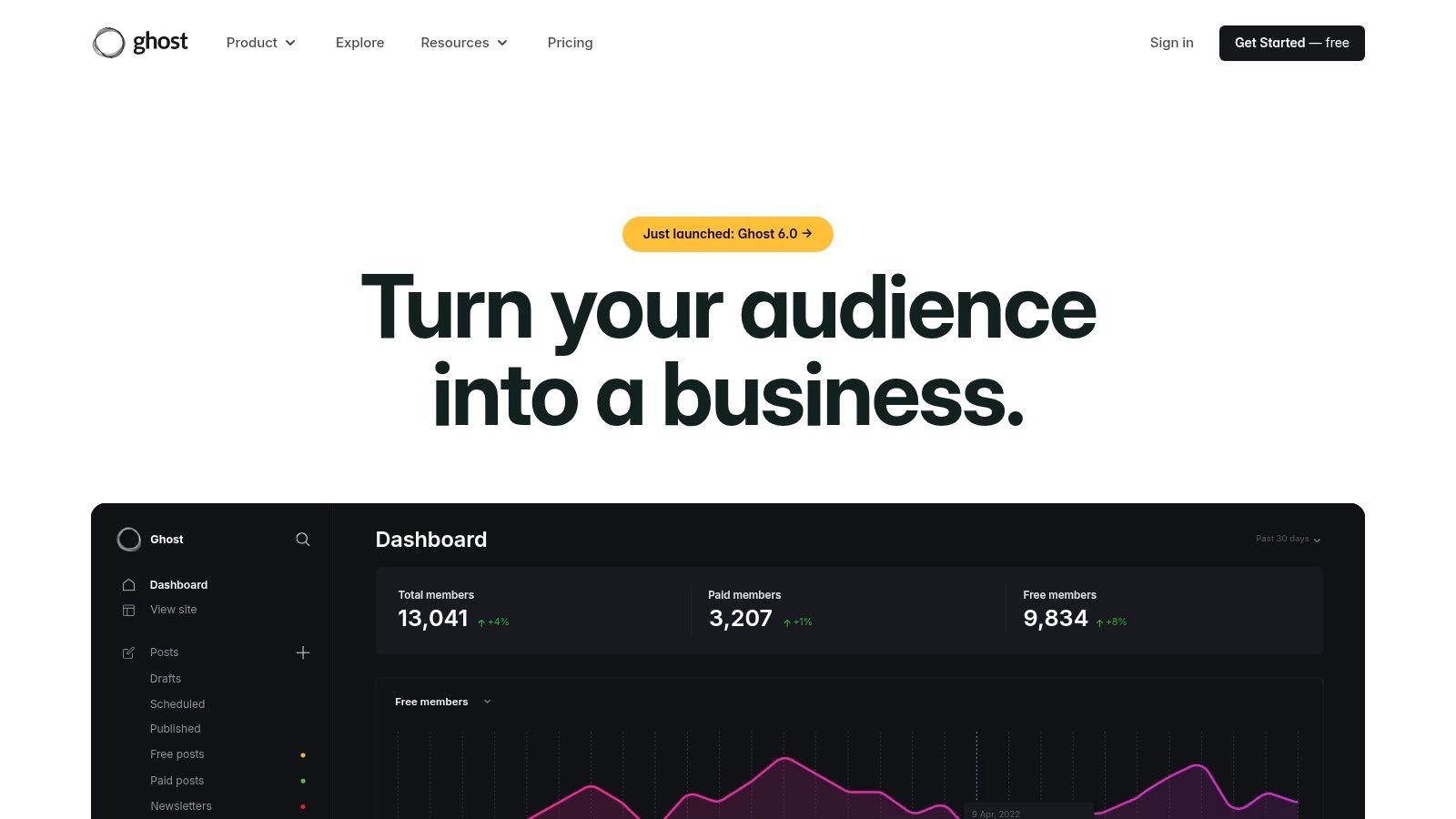
Ghost takes no platform transaction fee on paid subscriptions. The cost doesn't disappear, though. Creators connect their own Stripe account, processor fees still apply, and managed hosting pricing and limits depend on the plan and scale.
Ghost combines a branded website, newsletters, and paid memberships in one publishing system built for independent writers and media businesses. It supports free and paid membership tiers and multiple newsletters, so a publication can run a free weekly post alongside a paid tier with its own cadence. That structure suits creators who want a creator-owned site and direct member relationships, rather than publishing inside someone else's app.
Where the work lands
Setup requires more decisions than a simple newsletter service. Hosting route, theme, domain, email sending, and member tiers all need choosing, whether the software is self-hosted or run through managed Ghost(Pro) hosting. None of that is unusually hard, but it's ongoing ownership, not a page that's live in an afternoon with no further thought.
Conversion expectations need the same realism. A large-network benchmark in the Creator Spotlight paid newsletter benchmark reported a median free-to-paid conversion rate of 0.62%, roughly six paying subscribers per 1,000 free readers. At that rate, 50,000 free subscribers produce about 310 paid members, so tier design and retention matter as much as traffic.
Best use: A writer or small publication that wants a real website, newsletters, and memberships under its own brand.
Main cost to watch: Stripe processing plus hosting plan limits as member counts and sending volume grow.
Main trade-off: More control in exchange for more setup and operating decisions.
Ghost is a strong pick when publishing is the business. It's less suited to a creator who mainly wants tips, merch, or a fan page attached to a social profile.
3. Patreon
The headline number on Patreon is the one to read first. For creator pages published after August 4, 2025, the Patreon standard platform fee notice sets a standard platform fee of 10% of eligible payments. Payment processing and other applicable charges sit on top of that.
Older Patreon accounts may be on different legacy rates, so any comparison needs to state whether a quoted percentage applies to a new creator or an old account. Commerce has its own pricing, too. The Patreon payout help documentation states Commerce carries a 5% platform fee on successfully processed payments, while legacy membership fees varied by plan. Processing, payout fees, currency conversion, and taxes can all reduce the final payout further.
What the fee buys
Patreon gives fans a familiar membership experience. Creators can offer monthly and annual tiers, one-time purchases, posts, video, livestreams, chats, and newsletters, with member analytics and discovery tools around them. That range works well for podcasters, video makers, and artists whose audiences already understand paying a monthly pledge.
Scale is not the question. Patreon has run creator memberships since 2013. Familiarity helps conversion, because supporters may already have an account and saved payment details.
Recurring support: Monthly and annual memberships form the core of the offer.
One-off sales: Commerce adds single purchases alongside tiers.
Formats: Posts, video, livestreams, and chats keep delivery inside one member area.
The limit is structural. Patreon isn't a full-featured independent CMS, and the site, SEO footprint, and member experience stay largely inside Patreon's environment. It fits a creator monetizing an existing audience. It fits less well when the goal is building a branded publication that can be moved cleanly later.
4. Substack
Substack doesn't charge to publish, regardless of subscriber count. That makes the starting cost hard to beat. The charge arrives when paid subscriptions begin, and it grows with every dollar earned.
The Substack pricing support page states Substack retains 10% of each subscription payment when a writer enables paid subscriptions. For U.S. cards, the same schedule lists Stripe card processing at 2.9% plus $0.30 per payment, plus a Stripe Billing fee on recurring payments. On a small monthly tier, the fixed $0.30 component is noticeable, which is one reason annual plans often leave more margin.
Why writers still start here
Setup is minimal. A creator can publish free posts, build a list, then turn on monthly, annual, or founding-member subscriptions without migrating anywhere. The reader discovery and recommendation network can also surface a publication to people already reading similar newsletters, which a standalone site has to earn through search and sharing.
Free to start: Publishing costs nothing before paid subscriptions are enabled.
Paid tiers: Monthly, annual, and founding-member options are built into the same publication.
Discovery: Recommendations give new writers a route to readers they don't yet have.
Those advantages come with narrower design and site customization than a standalone CMS, and monetization centers on subscriptions rather than a broader mix of shop products or site features. A deeper fee and revenue comparison sits in this Substack, Ghost and beehiiv revenue breakdown. Substack works best as a fast newsletter launch. The 10% cut becomes the argument for leaving once paid revenue is steady.
5. beehiiv
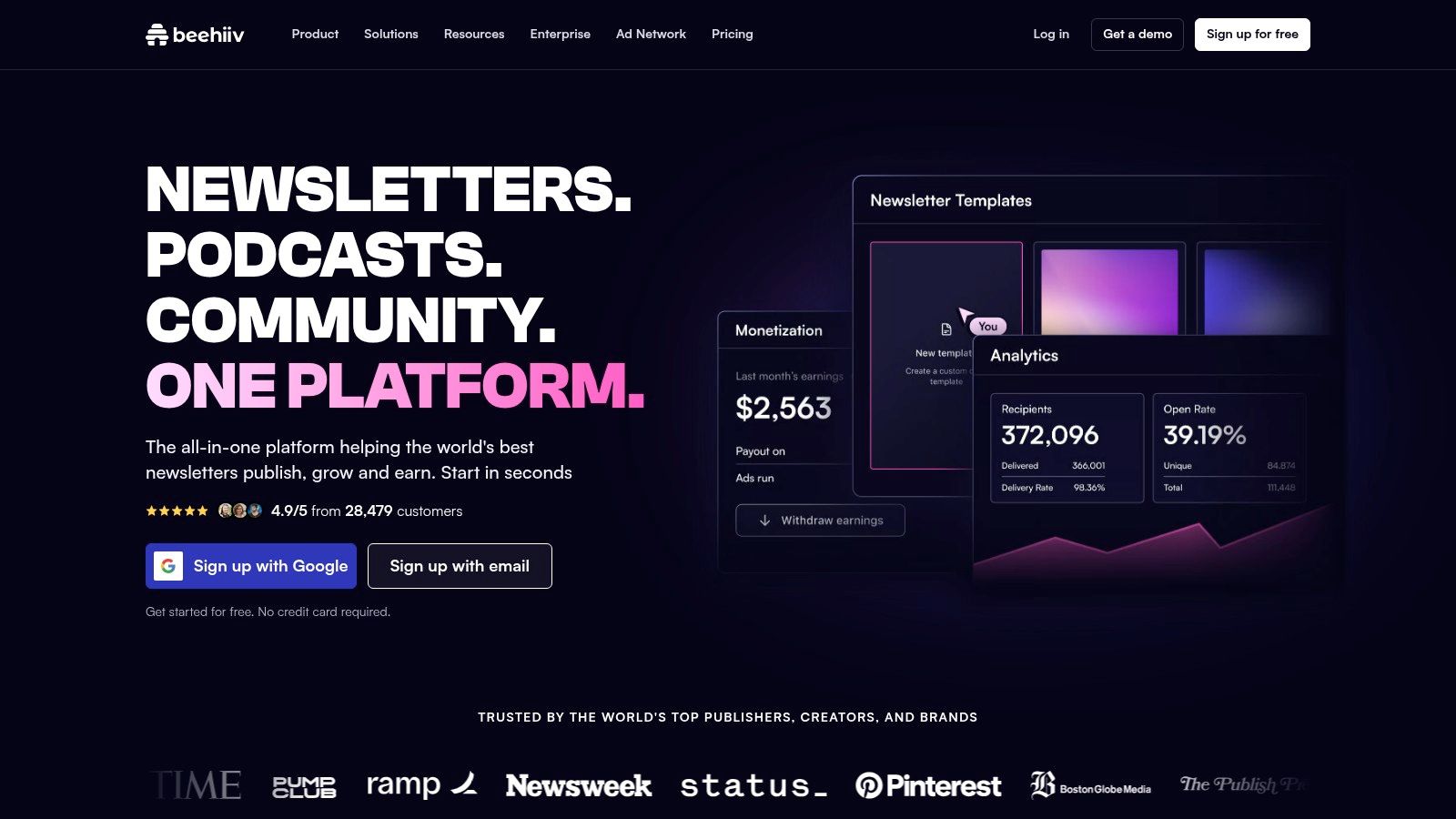
beehiiv approaches the problem from the newsletter out. There's a free entry point for smaller lists, and beehiiv takes no platform cut on paid subscription revenue. The catch is plan gating. Monetization features require a paid plan, and costs can rise as the subscriber list grows.
That model swaps a revenue percentage for a scaling subscription. For a newsletter with paying readers, keeping the platform cut at zero is attractive. For a large free list that converts poorly, the bill is driven by list size rather than income, so revenue per subscriber needs watching before each plan jump.
More than subscriptions
beehiiv pairs a publication website with paid subscriptions, advertising, and digital product monetization on eligible plans. Automations and referrals support growth, which matters because newsletters usually need both new signups and paid conversion working at the same time. A creator can test a sponsorship or a small digital product without bolting on a separate store.
Subscription revenue alone is not the whole market. In 2025, fan subscriptions were a revenue channel for 27% of creators surveyed, according to a Net Influencer summary of a 2025 creator economy report.
Multiple revenue routes are therefore a practical strength, not a feature list extra. Still, the platform stays newsletter-first. It isn't a general-purpose content site for complex pages, documentation, or a broader business website.
Best use: A newsletter publisher who wants growth tools, paid tiers, ads, and products in one dashboard.
Cost to model: The paid plan required for monetization, plus subscriber-based price increases.
Before moving: Check what a migration involves using this guide to moving a newsletter from Mailchimp, Kit or beehiiv.
6. Kit
Kit, formerly ConvertKit, is an email and audience-business platform, not a complete blogging CMS. Creators who publish elsewhere can use it to manage their list and sell digital products and subscriptions, while keeping the main site on another platform.
Kit's pricing depends on subscriber count and plan, with advanced automation and collaboration features on paid plans. It charges a platform fee on digital products and subscriptions. Before comparing it with platforms that add payment processing on top, check Kit's current pricing page for the exact fee and whether processing is included.
Strength in the list itself
Email broadcasts, tags, and segmentation are central to Kit's offering. Tags help separate buyers from free readers, course students from newsletter subscribers, and lapsed members from active ones. Paid-plan automations can then send onboarding sequences, launch emails, and follow-ups to specific groups instead of requiring manual broadcasts.
Kit can support several income streams through one audience. For a creator with an established list, promoting products, subscriptions, and sponsorship placements can reduce reliance on a single revenue source.
Audience tools: Tags and segmentation let you target offers rather than send every message to the whole list.
Revenue options: Sell digital products and subscriptions, and use eligible sponsorship tools through the list.
Sponsorship control: Review offers before accepting them to protect reader trust.
The trade-off is publishing setup. Kit does not replace the website or blog where your content lives, so you'll need another platform and must handle the integration between them. Choose Kit when email is the core business; budget for both its current fees and the separate publishing setup.
7. Ko-fi
Ko-fi is the lightest setup in this list. A creator gets a page for tips, memberships, commissions, and shop items, and payments go directly to the creator's own PayPal or Stripe account. Direct payout matters for small earners who can't afford waiting on platform payout cycles.
The free option charges 0% on one-time tips and 5% on memberships, shop sales, and commissions, with processor fees also applying. That split shapes how the page should be used. Tips are cheap to collect. Recurring memberships and shop revenue carry the 5% platform cost, so pricing needs to account for it from day one rather than after the first payout disappoints.
Why tips still count
Tipping is already a familiar way for audiences to support creators, and it asks nothing of a supporter beyond a single payment, which makes it a low-friction entry point into paid support.
Tips: One-time support with no Ko-fi percentage on the free option.
Memberships: Monthly tiers for supporter-only posts and perks.
Shop and commissions: Digital or physical items and commissioned work sold from the same page.
Publishing and website capability stay limited compared with a full CMS, and creators handle fulfillment of their own offers. That's fine for an artist taking commissions or a streamer collecting support alongside social profiles. Ko-fi works as a monetization page attached to an audience, not as the home for a growing publication.
8. Buy Me a Coffee
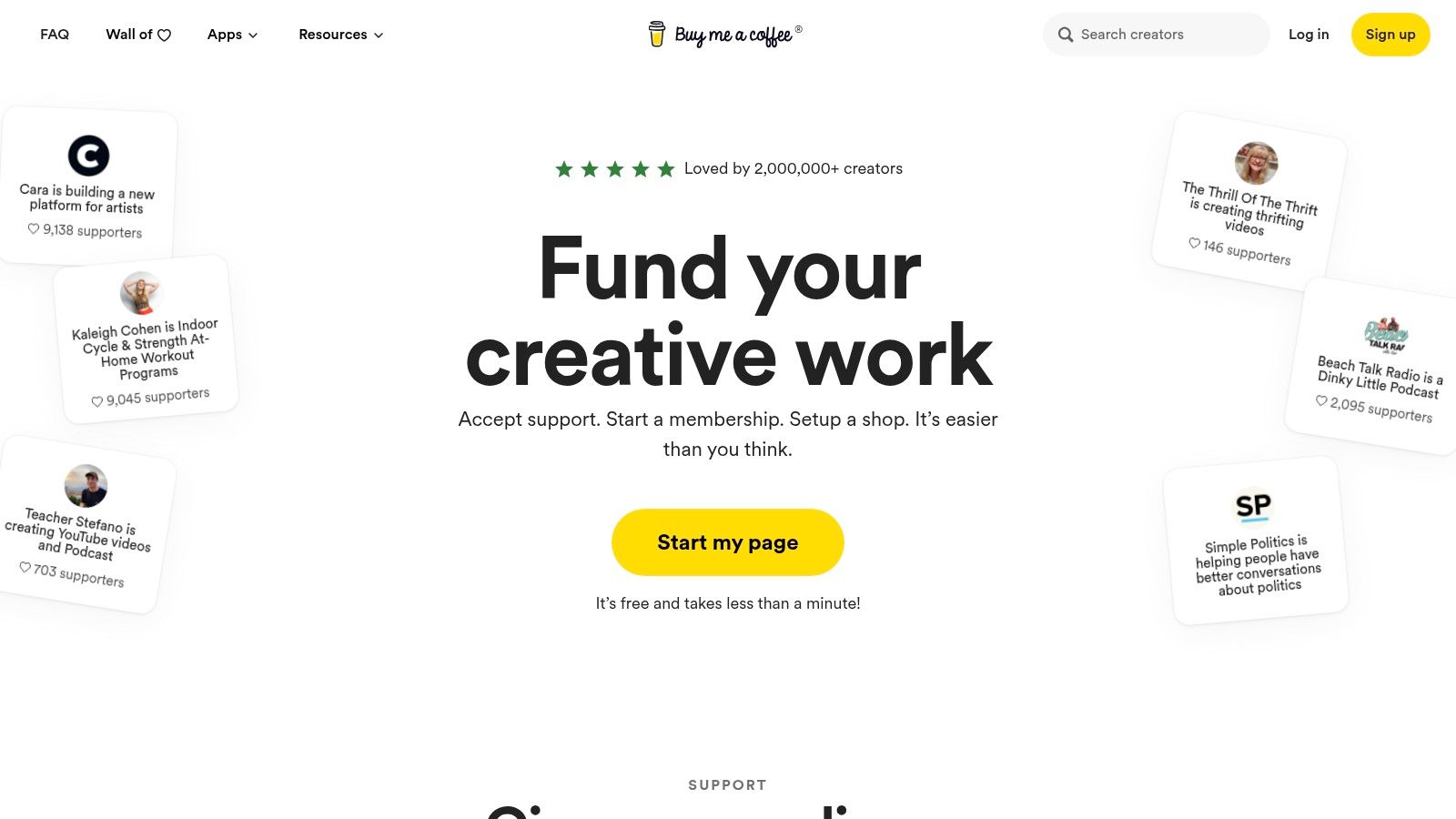
Buy Me a Coffee has no monthly platform subscription. The cost is a 5% transaction fee, with payment processing fees additional. For a creator testing whether anyone will pay at all, that structure removes the risk of a monthly bill arriving before revenue does.
The service provides a hosted supporter page with one-time support, recurring memberships, and paid extras. Publishing and email features are included, which makes it more than a bare tip jar. A writer, podcaster, or developer can post updates, sell an extra, and collect monthly support without running a website at all.
Best as a first paid offer
That simplicity fits the economics of most creators. CreatorIQ research summarized in a Yahoo Finance article on sustaining the creator economy found 67% of creators earned less than $10,000 from content creation in the prior year, and 62% said creation was not their primary income source. For side income at that scale, low fixed costs and minimal setup can matter more than keeping the last few percent.
A percentage fee is cheap at $100 a month and expensive at $5,000 a month. The same rate changes verdicts as revenue grows, so the decision should be revisited rather than treated as permanent.
No monthly fee: Costs only appear when a supporter pays.
Simple checkout: Supporters face a short, familiar payment flow.
Extras: Paid content and one-off offers sit beside memberships.
Control is the trade. Site flexibility and publishing depth are limited next to a dedicated CMS, and creators still deliver their own offers. Buy Me a Coffee is a clean way to prove demand. It isn't where a publisher builds a long-term content business with search traffic and tiered archives.
9. Kajabi
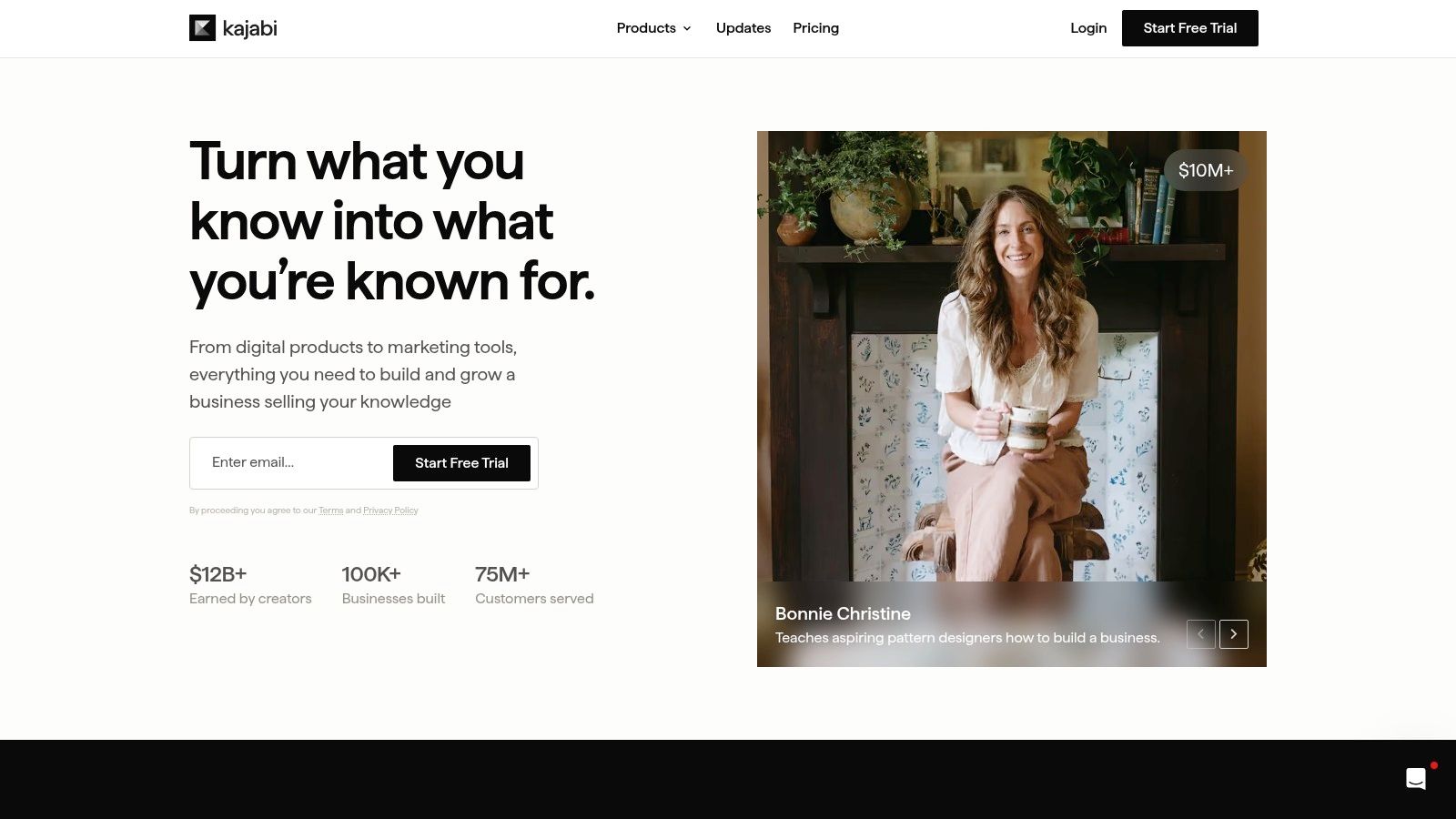
Kajabi sits at the other end of the price range from tip pages. The subscription costs more than lightweight newsletter tools, and plan limits apply. In return, there's no platform revenue share, and the product is built around selling knowledge rather than collecting small recurring pledges.
Kajabi combines a website and landing-page builder with courses, coaching, memberships, digital products, email marketing, and sales funnels. That breadth can replace a separate course host, funnel builder, and email service. Whether it's good value depends entirely on whether those tools would otherwise be paid for separately.
When the higher bill makes sense
A creator selling one structured course with modules, progress, and a community needs different infrastructure from a writer selling paid posts. Kajabi is built for the first case. Packaging, checkout, delivery, and follow-up marketing sit in one account, which reduces the integration work that otherwise falls on the creator or a contractor.
The wider market context supports that kind of packaged offer. The Grand View Research creator economy market report estimated the global market at USD 252.3 billion in 2025 and projects USD 1.3455 trillion by 2033. Advertising represented 36% of that market, which is a reminder that direct product and course revenue is only one slice of creator income.
Courses and coaching: Structured educational offers are the core strength.
Marketing built in: Landing pages, funnels, and email remove several separate subscriptions.
No revenue share: The platform cost stays flat instead of rising with each sale.
For paid posts or a simple newsletter, Kajabi is more machinery and more money than the job needs. It's the right comparison point when a creator's main product is a course, not content access.
10. Fourthwall
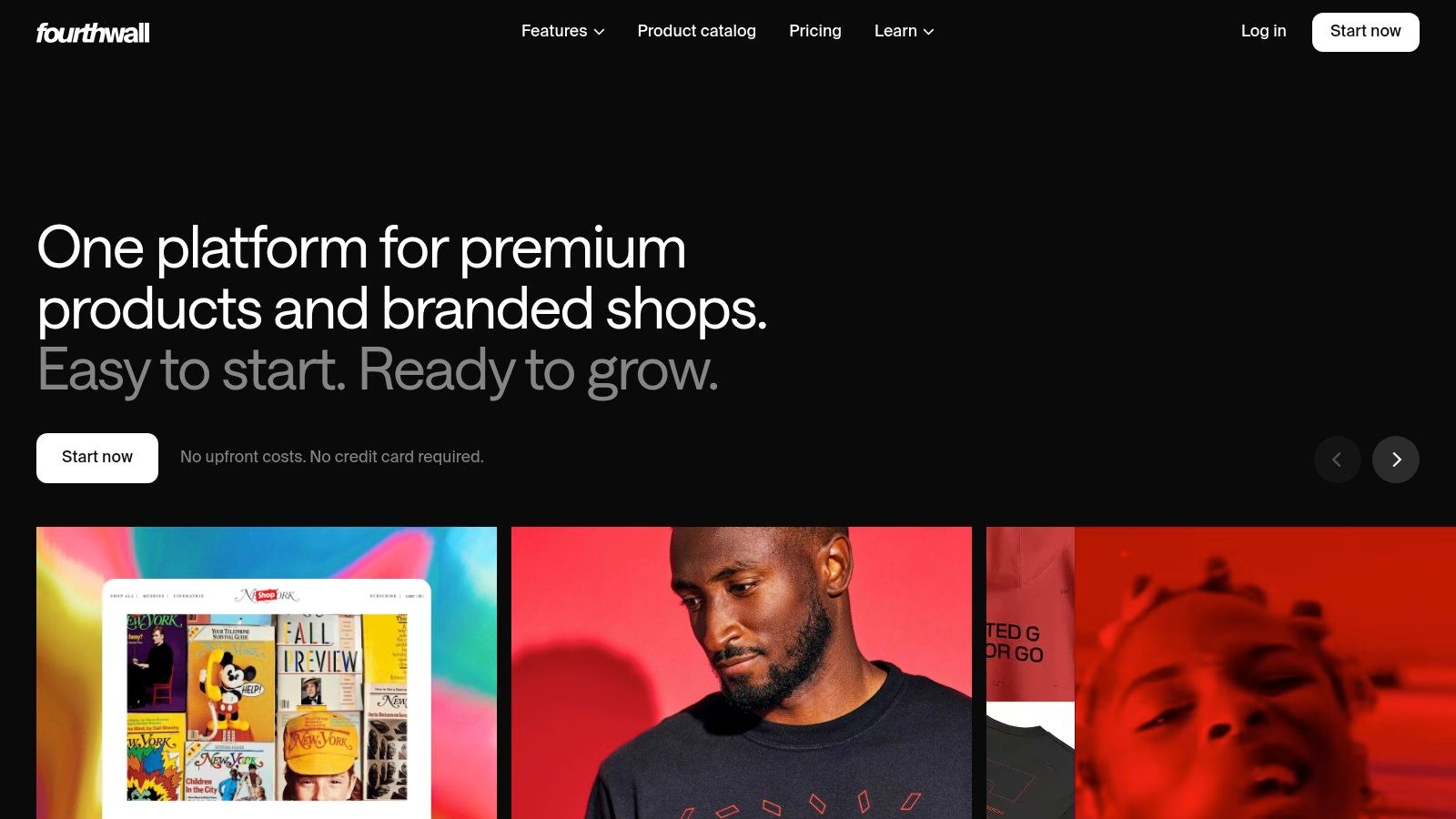
Fourthwall starts with no monthly fee. Platform fees vary by product type, and payment processing charges also apply. The key cost question isn't the subscription. It's the margin left after product costs, platform fees, and processing on each order.
The appeal is operational. Fourthwall pairs a customizable storefront with print-on-demand merchandise, so creators sell products without managing production, inventory, or shipping themselves. Digital downloads and members-only content and perks sit alongside the physical catalog, letting one storefront carry a hoodie, a download, and a membership at the same time.
Check margins before designing anything
Catalog merchandise costs directly affect what a creator keeps. A design that looks profitable at a headline price can thin out once base product cost and fees are deducted, so per-item margin should be calculated before launch, not after the first sale. Memberships and digital sales carry platform fees as well, and those rates deserve the same scrutiny as any other percentage in this roundup.
Merch without logistics: Production and shipping are handled for the creator.
Mixed catalog: Physical products, downloads, and membership perks share one storefront.
No upfront bill: Starting costs nothing monthly, which suits a small merch test.
Fourthwall isn't built for long-form publishing or newsletter operations, so writers still need a content home elsewhere. Creators weighing a shop against selling directly from a blog can compare the approaches in this guide to selling products on a blog without Shopify. For video and social creators whose audience wants products, Fourthwall removes the hardest operational work. For publishers, it's an add-on revenue channel rather than a primary platform.
Platform fees, paid membership support, and best-fit creators
Platform commission is only one part of the cost. Check whether paid memberships are included, whether a paid plan is required, and whether you need separate tools for publishing or email. Payment processing may also apply.
Item | Platform fee | Paid memberships or subscriptions | Best for |
|---|---|---|---|
VeloCMS | 0% platform commission | Native paid memberships and subscriptions; Stripe processing fees apply | Creators seeking an all-in-one publishing and monetization platform |
Ghost | 0% transaction fee | Free and paid memberships with multiple tiers | Independent publishers wanting a branded site and newsletter |
Patreon | 10% for creator pages published after August 4, 2025 | Monthly and annual memberships | Creators offering fan memberships and varied content |
Substack | 10% of paid subscription revenue | Monthly, annual, and founding-member subscriptions | Writers launching paid newsletters |
beehiiv | 0% platform cut on paid subscriptions | Paid subscriptions; monetization requires a paid plan | Newsletter creators focused on growth and multiple revenue streams |
Kit | Platform fee on digital products and paid subscriptions; check Kit's pricing page for the current rate | Subscriptions and other creator sales | Creators monetizing an email audience |
Ko-fi | 0% on one-time tips; 5% on memberships, shop sales, and commissions | Membership tiers | Creators seeking a simple support page and shop |
Buy Me a Coffee | 5% transaction fee | Recurring memberships | Creators seeking a simple supporter hub |
Kajabi | No platform revenue share | Memberships and community | Creators selling courses, coaching, and digital products |
Fourthwall | Set by product type; payment processing is charged on top | Paid memberships | Creators combining memberships with merchandise and digital sales |
The setup work varies. A publishing platform can combine a site, newsletter, and paid access, while a supporter hub or membership service may leave you to assemble the content and email tools around it. Compare the platform fee with processing costs and any plan needed to accept payments. VeloCMS offers native memberships with a 0% platform fee, but monetization requires a supported payment provider, and availability varies by country.
Pick the Fewest Moving Parts You Can Live With
Start with the revenue earned, not the revenue hoped for. That single discipline changes most platform decisions. A creator monetization platform that looks expensive at current income may be the cheapest option at three times that income, and a free platform with a 10% cut becomes the priciest tool in the stack.
Run the same arithmetic on every candidate. Take a realistic monthly revenue figure, subtract the platform percentage, subtract payment processing, then subtract the plan tier needed to access the features being used. After that, count what still has to be bought separately. A newsletter tool that needs a separate website, a membership plugin, and a theme purchase isn't competing on its sticker price anymore.
Match the platform to the actual offer
A tip page doesn't need a CMS. A course business doesn't need a tip page. Problems start when a creator buys for the business imagined two years out and pays for unused capacity every month until then, or picks the simplest tool and rebuilds everything the moment a paid tier succeeds.
Tips and first sales: Ko-fi and Buy Me a Coffee keep fixed costs near zero while demand is unproven.
Fan memberships: Patreon offers a familiar supporter experience, priced at a clear percentage of revenue.
Newsletters: Substack starts free, beehiiv adds growth and multiple revenue routes, and Kit serves list-led businesses that publish elsewhere.
Owned publishing: Ghost and VeloCMS suit creators who want a branded site with memberships attached.
Courses and merch: Kajabi handles structured education, and Fourthwall removes merchandise logistics.
Portability belongs in the same decision as fees. Before committing, a creator should confirm that posts, subscriber lists, member records, and media can be exported in usable formats, and that URLs can be redirected if a move happens later. A low commission means little if leaving costs the audience relationship itself.
Exit check: Export everything once before relying on a platform. If the export is incomplete or unusable, the switching cost is already known, and it is high.
Testing beats deliberating. A small paid offer on one platform, priced modestly and promoted to the existing audience, reveals conversion, refund behavior, and support questions within weeks. Moving a whole archive and audience before that test risks maximum disruption for minimum information.
For creators who want publishing, newsletters, memberships, and commerce in one subscription, VeloCMS offers a 14-day free trial on every plan, with no free plan, and Pro, Business, and Agency can be compared at velocms.org/pricing. Payment setup depends on a supported provider and availability in the creator's country. Whichever option wins, the right answer is the one whose total cost, in fees and in tools still to assemble, stays lowest at the revenue the creator has.
If the goal is to publish, send newsletters, and sell memberships and products from one branded site without paying a percentage of every sale, VeloCMS brings those pieces into a single subscription with a 14-day free trial on every plan. Compare the plans, run the fee math against current revenue, and start the trial with one small paid offer before moving an entire audience.