email marketing platform · Oct 14, 2026
Best Email Marketing Platform: 10 Ranked for Creators
No single email platform fits every creator, and the right choice depends on list size, send frequency, and whether the tool also has to support a website. For most creator setups, Kit, MailerLite, Mailchimp, VeloCMS, and Brevo cover the widest range of needs without forcing a huge stack. Which plat

No single email platform fits every creator, and the right choice depends on list size, send frequency, and whether the tool also has to support a website. For most creator setups, Kit, MailerLite, Mailchimp, VeloCMS, and Brevo cover the widest range of needs without forcing a huge stack.
Which platform wins changes fast once inbox placement, segmentation, automations, and pricing are judged together. That is why this comparison starts with the practical trade-offs that matter after signup, not the feature grid. spam word checker
Table of Contents
1. Kit (formerly ConvertKit)
Kit fits solo creators who want tagging, simple automations, and a list that's easy to manage without wrestling with a complex interface. Its free plan is unusually generous for early newsletters, covering up to 10,000 subscribers with unlimited broadcasts, plus unlimited forms and landing pages on the way in. Kit
Practical rule: Kit makes sense when the list is the product and the editor does not need to do everything.
The trade-off is design depth. Template variety and layout control are more limited than broader suites, so branded campaigns can feel plain if visual polish matters more than speed. Paid tiers open up more of the advanced stack, including Kit branding removal and more advanced split testing.
Kit is also a good fit for creators who monetize through sponsorships, referrals, or commerce integrations. The platform keeps the workflow centered on publishing and audience management, which is why many authors and solo publishers stick with it after the first launch.
2. MailerLite
MailerLite is a clean choice for small teams that want websites, landing pages, and email in one place without a steep learning curve. Its pricing structure is easy to understand, and the paid tiers feel built for users who care more about shipping campaigns than configuring software. MailerLite
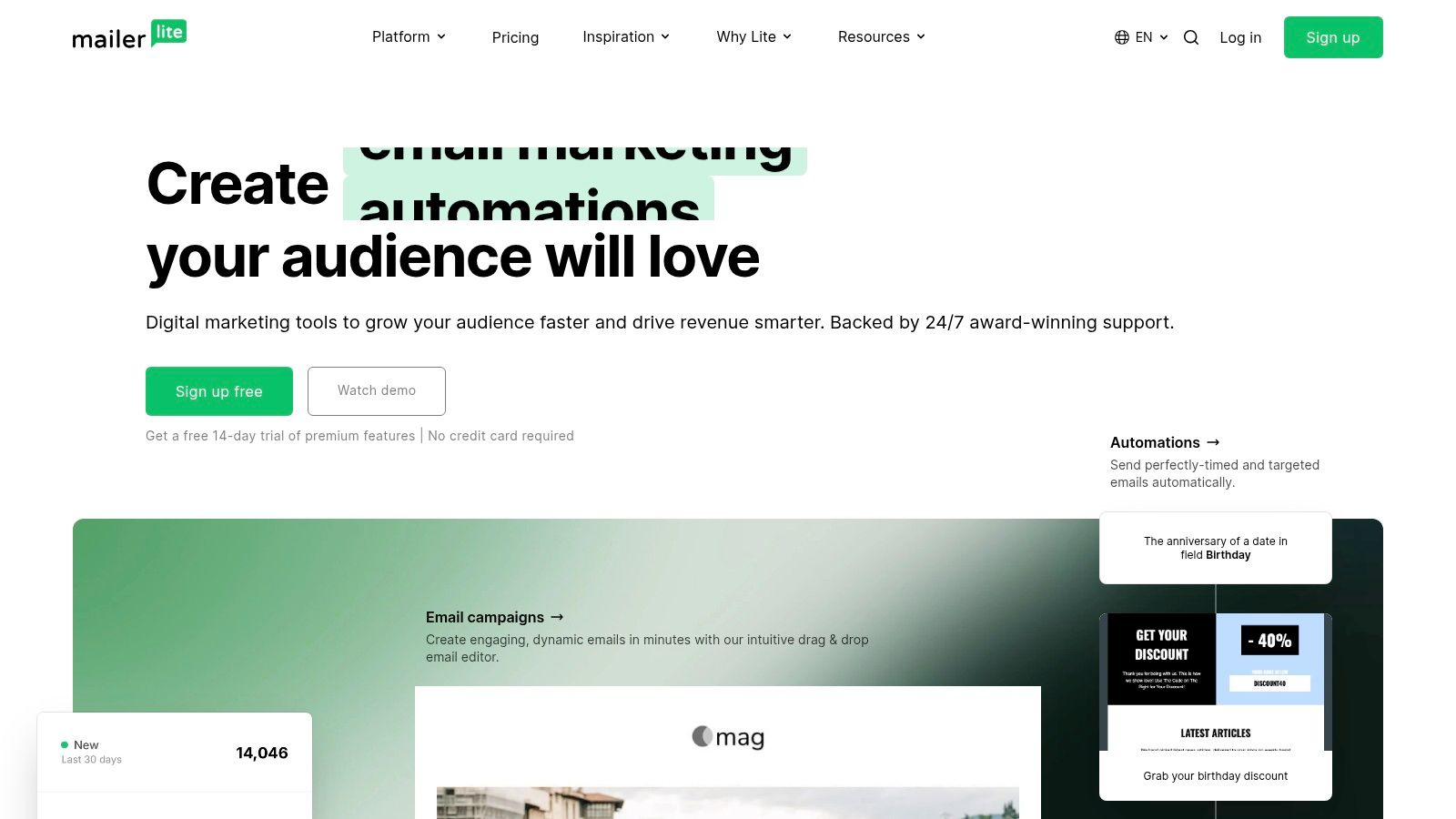
The free plan is small, with up to 250 subscribers and 2,500 monthly emails, so active senders can outgrow it quickly. The Power tier is where the platform becomes more flexible, because it gives you unlimited automations and sends, while built-in sites, forms, and digital product support reduce the need for extra tools.
MailerLite integration for VeloCMS
MailerLite works best for creators who want a predictable bill and a tidy interface. The main limitation is that serious automation needs a paid tier, so it's less forgiving for newsletters that send often and segment heavily.
3. Intuit Mailchimp
Mailchimp still earns a place on any best email marketing platform list because it has reach, integrations, and a familiar workflow for teams that expect to grow. It offers templates, automations, basic CRM, analytics, and a deep third-party ecosystem, with more than 300 integrations and a large template library. Mailchimp
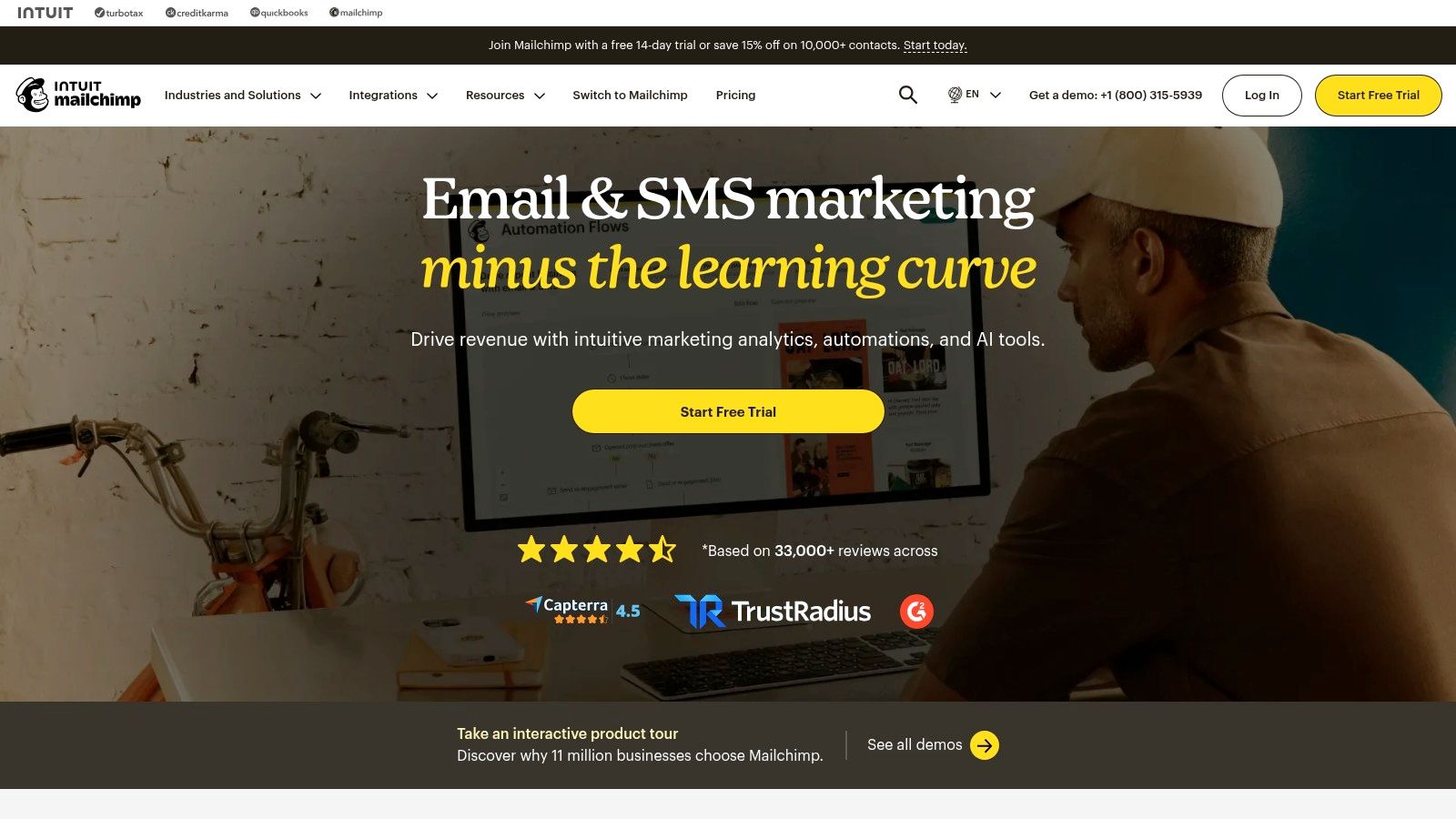
Its strength is also its trap. Pricing scales on both contacts and sends, so a list that grows and sends often can become expensive faster than expected. That makes Mailchimp a better fit for teams that value ecosystem breadth and upgrade paths over strict cost control.
The platform is strongest when the site, forms, and campaigns all need to connect to many other apps. It's weaker when the business wants the bill to stay predictable as volume rises.
Move a newsletter from Mailchimp to VeloCMS
4. VeloCMS
VeloCMS stands out for creators who want fewer moving parts. It combines a content system, native newsletter delivery, paid memberships, commerce, AI-assisted editing, and SEO tooling in one subscription-first platform, so the site and the list live together instead of being stitched together with plugins and outside services. VeloCMS
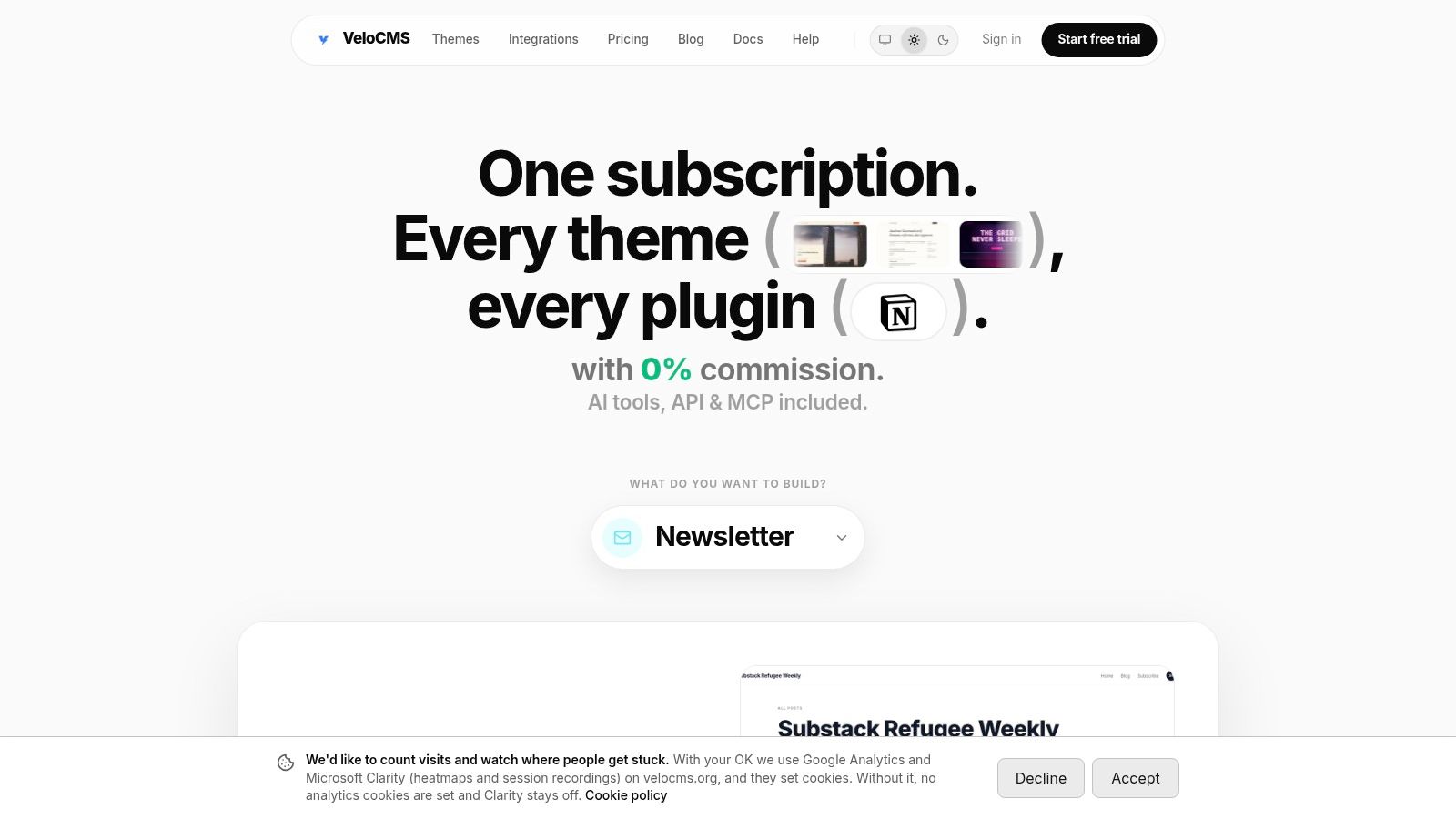
It also gives creators a cleaner ownership story. VeloCMS includes tag-based newsletter segmentation, newsletter automations, native newsletter delivery, importers for platforms such as WordPress, Ghost, Substack, and beehiiv, and full exports in Markdown and JSON, which makes migration and portability easier to plan for.
Practical rule: If the website, the newsletter, and paid content all need to stay in sync, the CMS should not be a separate problem.
Pricing is straightforward. Pro starts from $7.20 per month billed annually ($9 billed monthly), Business from $23.20 ($29 monthly), and Agency from $55.20 ($69 monthly), with every plan including a 14-day free trial and no permanent free tier. That setup works well for creators who want predictability, but it may not suit hobbyists looking for a forever-free option.
The honest limitation is the trial-only entry point. It's a serious platform, but the absence of a free plan changes the buying decision for smaller newsletters that are still testing the water.
5. Brevo
Brevo is a strong choice for teams that care about volume-based pricing and multi-channel messaging. It bundles email, SMS, transactional email, automation, and segmentation, so it suits businesses that keep a large list but do not always send to all of it. Brevo
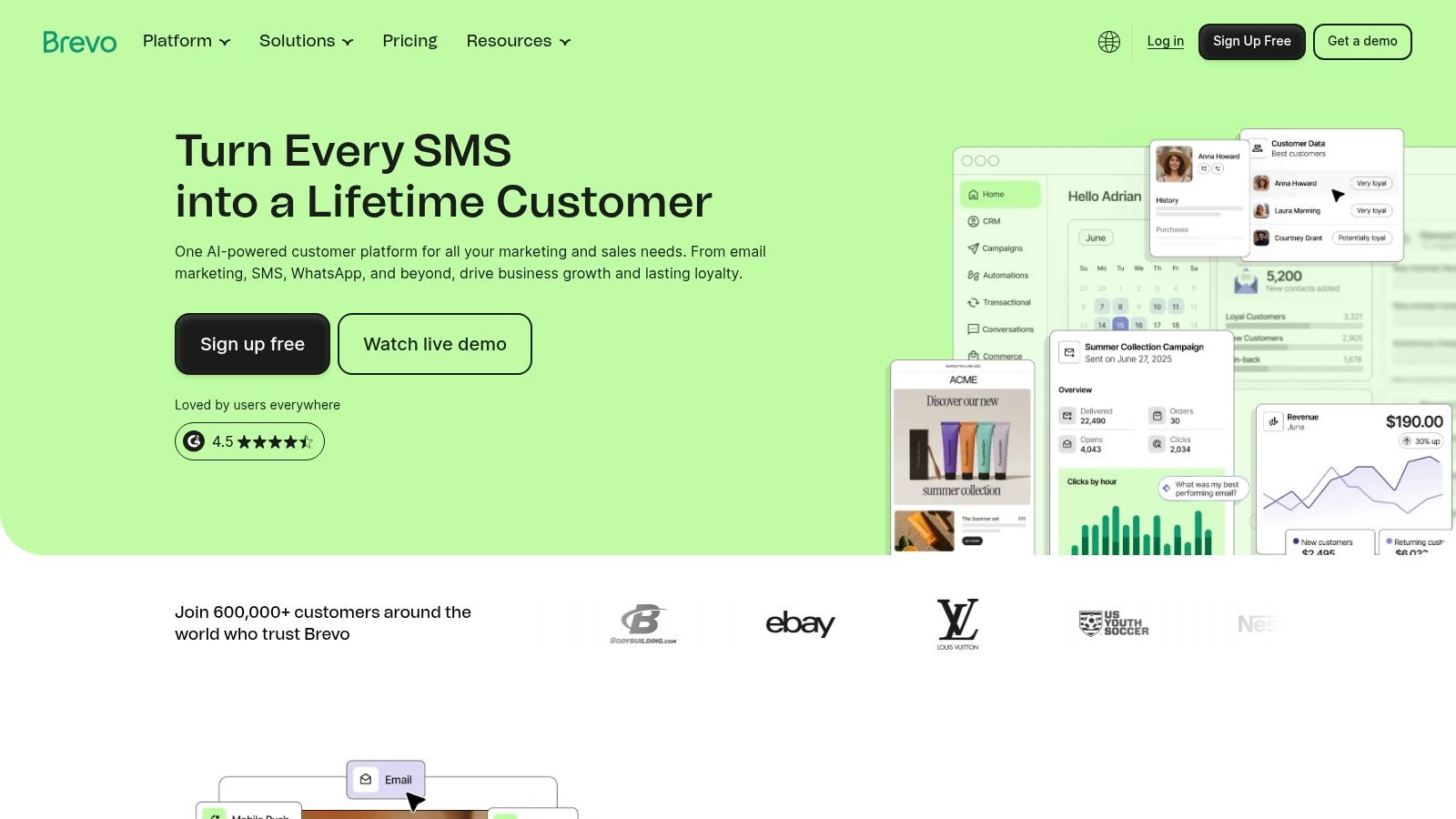
The practical upside is control over send volume. That can be useful when a business stores many contacts but sends more selectively, because the bill tracks usage more closely than some contact-based tools. Brevo also supports segmentation and automations, which helps when campaigns depend on behavior rather than just list size.
Its limitation is that several features are gated by plan, so the entry tier may not cover everything a growing list needs. Brevo is broad and useful, but teams that want highly specialized creator tooling may find it less focused than creator-first products.
6. ActiveCampaign
ActiveCampaign is the platform for teams that treat automation as the main event. Its segmentation, workflow depth, CRM extensions, and add-ons for SMS and reporting make it one of the strongest choices when journeys need to branch, score, and react to behavior across the site. ActiveCampaign
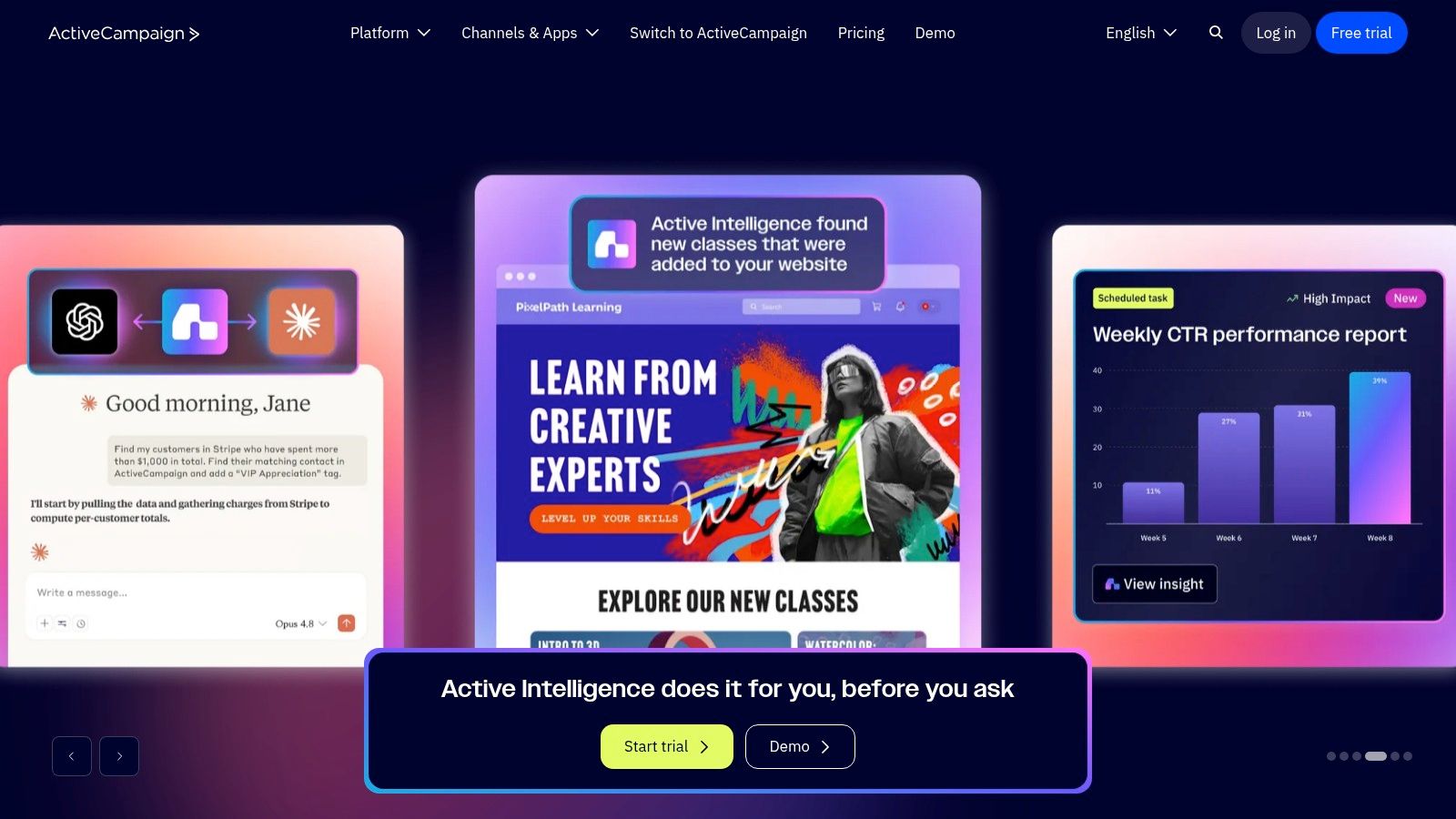
The upside is obvious once the first serious automation is built. The downside is the bill can get complicated because pricing is dynamic and add-ons can raise total cost. That means it works best for teams that know they need more than a basic newsletter engine.
ActiveCampaign also suits businesses that expect multi-user workflows and want a platform that can grow into a heavier operations stack. It's less friendly for creators who want simple broadcasts and a fast launch.
7. Klaviyo
Klaviyo is best for ecommerce brands that need revenue-linked email and SMS. It is built around active profiles, multi-channel messaging, and deep commerce integrations, so it feels more like a customer data layer than a plain email tool. Klaviyo
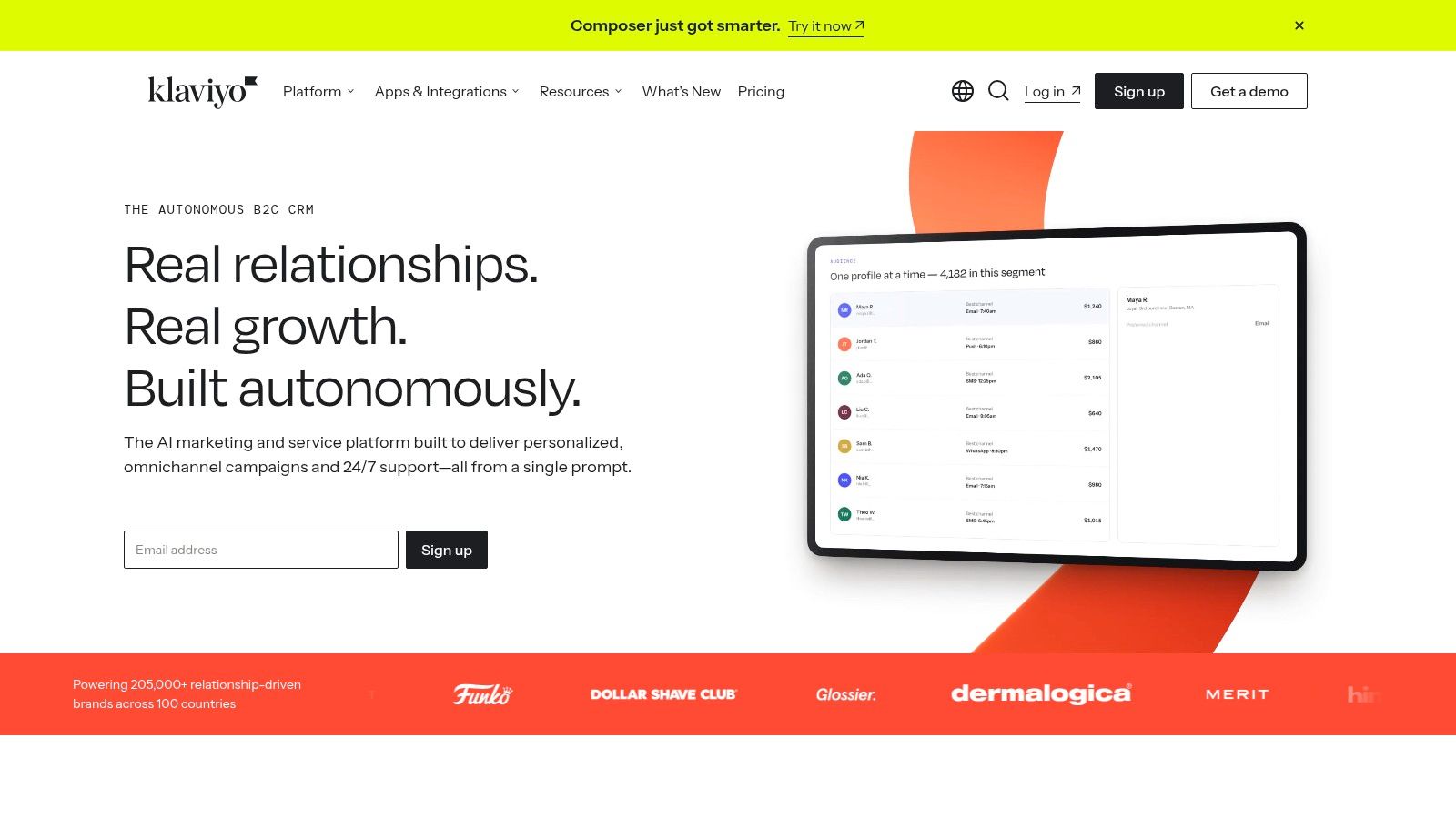
The free plan is narrow, with up to 250 profiles and 500 email sends per month, which is enough for testing but not much else. Costs can rise quickly as profiles and channels increase, so the platform rewards stores that have the revenue to justify it.
Klaviyo integration for VeloCMS
Klaviyo is strongest when product data drives the campaign calendar. It is weaker for publishers and creators who mainly need newsletters, pages, and simple automations rather than commerce-heavy segmentation.
8. Omnisend
Omnisend is built for ecommerce teams that want prebuilt flows without spending days assembling them. Prebuilt ecommerce workflows such as cart abandonment, plus a product recommender, are included on every plan, which makes it attractive for stores that want to move quickly on common revenue workflows. Omnisend
The main appeal is convenience. Email and SMS sit together, and the platform is clearly shaped around commerce use cases rather than general-purpose publishing. That makes it easier for smaller stores to launch without building every automation from scratch.
Its limitation is cost creep as the list grows. Contact-based pricing can become less comfortable over time, and SMS requires separate credit purchases that vary by region. Omnisend is useful, but it's not the cheapest path once volume increases.
9. GetResponse
GetResponse makes sense when the marketing stack has to stretch beyond email. It combines campaigns, funnels, landing pages, webinars, ecommerce tools, and AI helpers, so teams that host live events or build lead-gen funnels can keep more of the workflow under one roof. GetResponse
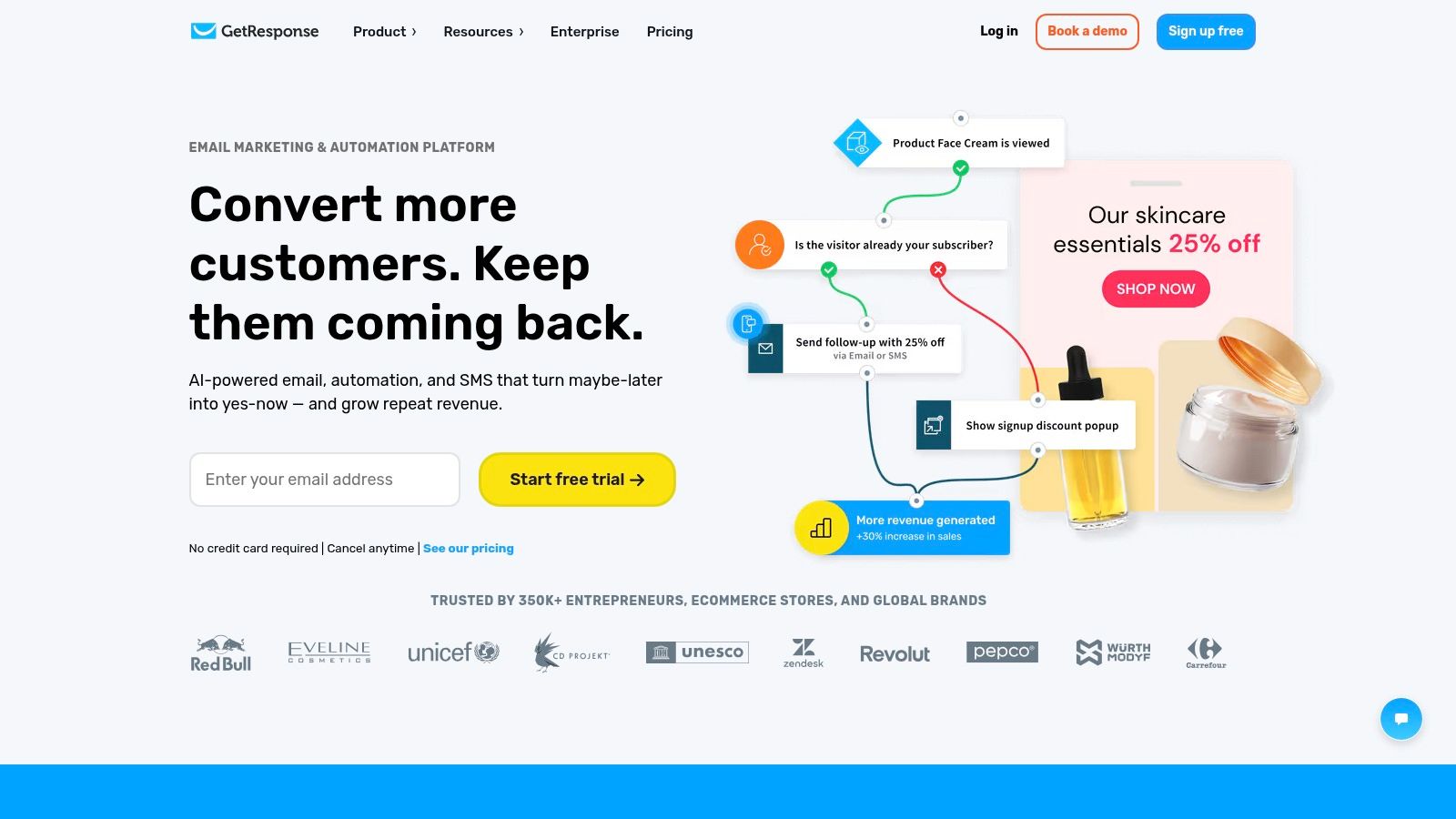
That breadth is the reason to choose it. The trade-off is that higher-tier features stay gated, and pricing depends on the plan path and commitment length, so it takes a little more care to estimate the actual monthly bill. It is a consolidation tool, not a minimal newsletter app.
GetResponse is best for teams that would otherwise pay for multiple products. It is less compelling for creators who only need a clean broadcast platform with simple automations.
10. Campaign Monitor
Campaign Monitor is an email-first platform for teams that care about design control and polished presentation. Its visual editor, branded templates, and send-time optimization on the Premier plan make it a practical pick for agencies and small businesses that want campaigns to look deliberate. Campaign Monitor
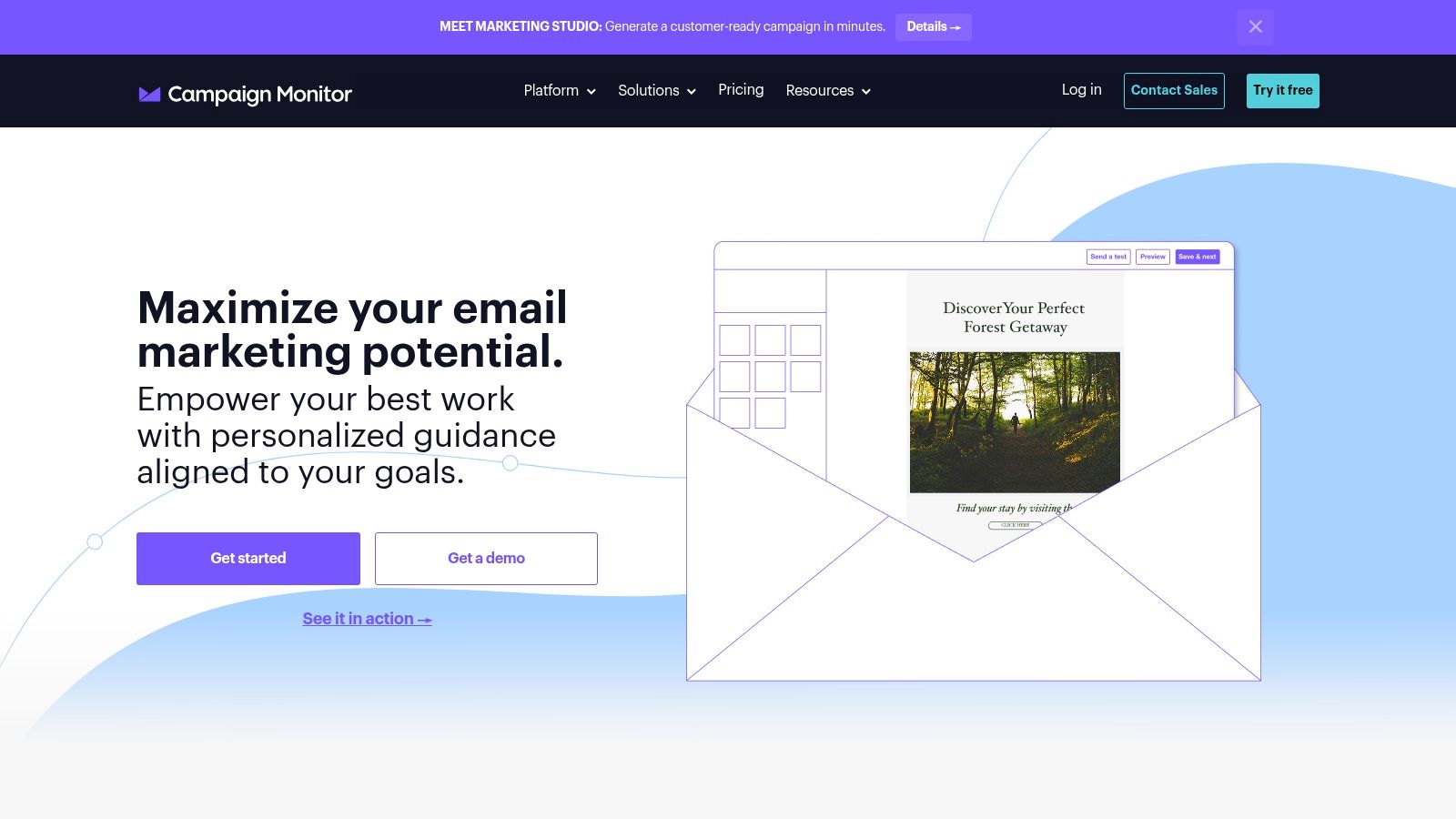
The strength here is campaign building. It's easy to produce a clean send and keep brand standards tight, especially when several clients or sites need consistent styling. The weakness is that it remains mostly email-centric, with less native channel breadth than broader suites.
That makes Campaign Monitor a good fit for agencies, but not the best match for teams that want deep automation or an all-in-one content stack. It does one job cleanly, then gets out of the way.
Top 10 Email Marketing Platforms Comparison
Platform | Core features | Monetization & deliverability | Target audience | Pricing & value | Unique selling points |
|---|---|---|---|---|---|
Kit (formerly ConvertKit) | Broadcasts, visual automations, landing pages, creator tools | Supports paid newsletters, commerce integrations, standard deliverability | Solo creators, authors | Free up to 10k subscribers, paid tiers for advanced features | Generous free subscriber cap, creator-focused app ecosystem |
MailerLite | Automations, sites/landing pages, ecommerce support, basic AI | Built-in digital product support, send limits on free tier | Small teams, creators | Free up to 250 subs/2.5k monthly emails; clear usage pricing | Built-in site tools, transparent pricing |
Intuit Mailchimp | Templates, automations, CRM, analytics, large integrations | Commerce integrations, pay-as-you-go email credits available | Growing lists, SMEs | Pricing scales by contacts & sends; upgrade paths for volume | Massive ecosystem, 300+ integrations |
VeloCMS (Recommended) | All-in-one CMS: block editor + AI, AI SEO, native newsletters, memberships, themes, integrations, exports | 0% platform commission, native email delivery, native commerce & memberships | Creators, small teams, agencies replacing fragmented stacks | Plans from $7.20/mo billed annually ($9 monthly), 14-day free trial, no free plan | 0% revenue fees, full Markdown/JSON exports, importers for common platforms, reduces plugin tax |
Brevo (Sendinblue) | Email, SMS, transactional email, automation | Pricing by monthly send volume; SMS credits sold separately | Teams with large stored lists but variable sends | Send-volume pricing model, plan-gated features | Strong transactional + marketing mix, SMS support |
ActiveCampaign | Deep marketing automation, CRM extensions, landing pages | Advanced segmentation drives revenue-focused automations | Teams needing enterprise-grade automation | Custom/dynamic pricing, add-ons for CRM/SMS increase cost | Very deep automation & segmentation, extensive integrations |
Klaviyo | Ecommerce email & SMS, revenue attribution, AI tools | Free plan limited by active profiles and email sends | Ecommerce stores and D2C brands | Free up to 250 active profiles and 500 email sends/month | Tight Shopify/commerce integration, revenue‑driven automations |
Omnisend | Prebuilt ecommerce automations, email + SMS bundling | Contact-based pricing; SMS credits per region | Ecommerce brands wanting fast commerce workflows | Contact-based pricing; SMS costs separate | Ready-made cart abandonment workflows, product recommender, email + SMS bundling |
GetResponse | Email, landing pages, funnels, webinars, AI assistants | Consolidates email + funnels + webinars in one stack | Teams wanting an all-in-one marketing suite | Tiered plans (Starter → Enterprise), premium features on higher tiers | Webinars + funnels + email in one platform, AI helpers |
Campaign Monitor | Visual designer, branded templates, send-time optimization (Premier) | Contact-based pricing, delivery optimization features | Agencies and SMEs focused on brand control | Contact pricing; professional services available | Strong visual design, branded templates, great agency workflows |
Choose Your Platform by Testing It With a Real List
The safest way to pick the best email marketing platform is to test it with the list you already have. Shortlist two tools that match your send schedule, import a small segment, build one welcome automation, and send a real campaign. Then check whether the inbox placement, segmentation, and reporting make sense for the people you publish to.
Cost matters just as much as features. Compare the monthly bill at roughly double your current subscriber count, not just at signup, because that is where many platforms stop feeling cheap. A tool that looks fine for a small list can become awkward once sends, contacts, add-ons, or multi-channel usage start stacking up.
Delivery and portability should be essential. Google sets extra requirements for senders who send more than 5,000 messages a day to Gmail accounts, including SPF, DKIM, and DMARC authentication, so the platform needs to support all three cleanly if the list is growing. The UK Information Commissioner's Office also makes clear that valid consent has to be freely given, specific, informed, and unambiguous, which means forms and automations should preserve explicit opt-in records and easy unsubscribe handling.
For creators, the right answer is often the tool that connects the site, the list, and the revenue model with the fewest surprises. That can be a creator-first platform, a broad suite, or a CMS with native newsletters, as long as it gives clear segmentation, dependable delivery, and a bill that stays understandable when the audience grows.
VeloCMS brings the website, newsletter, memberships, and SEO work into one place, which is useful when email can't live as a separate tool anymore. It gives creators a native newsletter system, exports, and audience segmentation, so the platform choice is tied to the site instead of stacked on top of it. Visit VeloCMS to see whether a single subscription fits the way the rest of the content operation already works.